Get Full Government Meeting Transcripts, Videos, & Alerts Forever!
Get email alerts on the Labor Employment topic
No spam. Unsubscribe anytime.
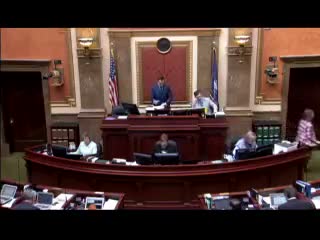
Utah House rejects bill directing state agencies on joint‑employer rules after heated debate
Summary
Lawmakers debated H.B. 116, which would have instructed state agencies to disregard certain administrative rulings when determining joint‑employer status; supporters said it protects small businesses, opponents warned of legal conflict. The second substitute failed 33–39.
Representative John Green, the bill sponsor, told the House that second substitute H.B. 116 was intended to give state administrative agencies ‘‘clarity and direction’’ when deciding whether two or more entities are joint employers, responding to a 2015 National Labor Relations Board decision he described as politically charged.
The bill would direct agencies to rely on statute, formally promulgated federal rules, or court decisions — and not on an agency adjudicative ruling ‘‘that has not been expressly authorized by Congress or upheld by a court,’’ Green said. He framed the measure as protecting franchisees and small businesses from being treated as employers of contractors or franchisee employees under a new, broader interpretation of joint‑employer law.
Members pressed the sponsor on practical effects and legal risk. Representative Blifferth asked whether emerging business models such as Uber and Lyft would be implicated, noting the NLRB ruling ‘‘could include and could also apply to that industry,’’ and Green agreed that the ruling could reach gig‑economy arrangements. Representative Ward and others sought to confirm whether the NLRB action was a rule or a case decision; Green repeatedly emphasized it was an adjudicative ruling, not a formally promulgated rule.
Several legislators worried about state agencies that carry out delegated federal programs. Representative Anderson said agencies ‘‘perform a federal function at the local level’’ and asked whether the bill would put those state agencies at odds with federal counterparts; Green said that was not the intent, noting the bill expressly recognizes federal preemption and includes language agencies requested.
On legal vulnerability, members asked whether the bill would invite court challenges or risk federal funding. Green acknowledged a risk that federal authorities could sue but noted similar measures already had been enacted in other states and that a parallel federal bill was pending in the U.S. Senate.
After more than two hours of debate and multiple rounds of questioning, the House voted on the second substitute. The measure failed and will be returned to staff for filing: 33 yes, 39 no.