Get Full Government Meeting Transcripts, Videos, & Alerts Forever!
Get email alerts on the National Guard Benefits topic
No spam. Unsubscribe anytime.
House adds funding amendment and passes National Guard death-benefit bill
Summary
Lawmakers approved First Substitute HB 98, adding an amendment to create a $100,000 death benefit for National Guard members who die on state active duty and establishing a restricted account with a small annual deposit and initial seed appropriation.
The House voted to pass First Substitute House Bill 98 as amended, creating a $100,000 death benefit for family members of National Guard service members who die while on state active duty and creating a restricted account to fund the benefit.
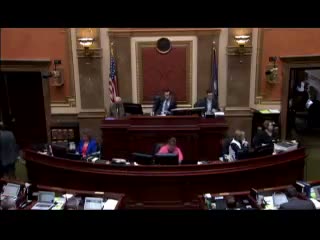
Representative Paul Ray moved Amendment No. 1 to add a funding source and explained the measure: the bill provides a $100,000 death benefit paid within 72 hours to the family of a Guardsman or Guardswoman who dies on state active duty, and the amendment establishes a restricted account funded at $9,500 per year with a one-time seed appropriation to ensure the account can pay benefits when necessary. "So what this bill does is it just gives a $100,000 death benefit to the family, paid within 72 hours," Ray said on the floor.
The amendment was presented as a funding technicality; no members rose for debate on the amendment, the motion to adopt the amendment carried, and the House then placed the amended bill before the body. After no further floor debate, the House approved First Substitute HB 98 as amended on a recorded vote of 73–0. The bill will be transmitted to the Senate for consideration.
Floor discussion noted that federal benefits apply when Guards members are on federal orders and that this state benefit is intended to cover state active-duty incidents, which Ray said have historically been rare but could be needed in events such as fires or floods.
The next step is Senate consideration of the amended bill.