Get Full Government Meeting Transcripts, Videos, & Alerts Forever!
Get email alerts on the Legislative Votes topic
No spam. Unsubscribe anytime.
Utah House approves transparency board seat, 'autocycle' vehicle bill; circles referendum timeline measure
Summary
On Jan. 28 the Utah House passed HB139 (adds a state board of education member to the Transparency Advisory Board) and HB38 (creates an 'autocycle' vehicle category and eases testing/licensing for certain three-wheeled vehicles), both by unanimous recorded tallies, and approved HCR2 recognizing the Utah Indoor Clean Air Act's 40th anniversary. Lawmakers circled HB11 for further review.
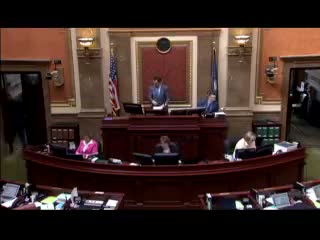
The Utah House of Representatives moved several bills forward during its Jan. 28 floor session, approving changes to the state transparency board and new rules for unconventional vehicles, and taking action to allow more review on referendum timing.
House Bill 139 (Transparency Advisory Board modifications) — sponsored by Representative Owens — was presented on third reading as a bill to add a representative of the State Board of Education to the Utah Transparency Advisory Board. Representative Owens said the change would give education officials a seat at a board that hosts voluminous public records; supporters said the addition would help manage the large volume of education data. Voting was 70 yes, 0 no; the bill passed and was referred to the Senate.
House Bill 38 (Unconventional Vehicle / 'Autocycle' amendments) — Representative Barlow moved to uncircle the bill and offered Amendment #2 to create the term 'autocycle' and to align testing and endorsement requirements for three-wheeled and similar vehicles more closely with other states. Barlow described the bill as a response to testing and classification problems for vehicles that drive more like cars than motorcycles; supporters noted local manufacturers and market interest, including a reference to Elio (reported preorder volume) and Vanderhall (a Utah manufacturer). After discussion and summations, the amended bill passed with 71 yes, 0 no.
Concurrent Resolution HCR2 recognized the 40th anniversary of the Utah Indoor Clean Air Act and honored individuals who gathered signatures to pass the original law. Representative Ray presented the resolution; it passed 70 yes, 0 no and was referred to the Senate.
House Bill 11 (Referendum amendments) drew questions during debate over the phrase "applicable trigger date" and whether the language was sufficiently precise. Representative Cox said the bill aligns statutory timelines with the governor’s action on bills (signature, veto, override), but some members asked for clearer language. The House granted a motion to circle HB11 to allow additional review.
Other business on the floor included a first-reading list of bills sent to committee, committee report acceptances, and rules-committee assignments for a larger set of bills. The House adjourned until Friday, Jan. 29 at 11:00 a.m.