Get Full Government Meeting Transcripts, Videos, & Alerts Forever!
Get email alerts on the Public Lands And Defense topic
No spam. Unsubscribe anytime.
Former Rep. Rob Bishop urges Utah lawmakers to push for more local control of public lands, warns Congress to restore military capacity
Summary
Former Utah House Speaker and U.S. Rep. Rob Bishop addressed the Utah House, praising state legislative processes and urging more state and local control over public lands, as well as stronger national defense funding to sustain assets like Hill Air Force Base.
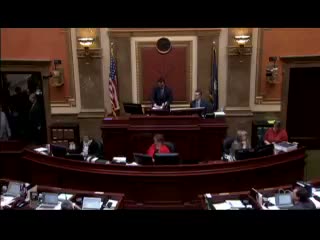
Congressman Rob Bishop, introduced as a former Utah House Speaker, addressed members in a wide-ranging floor speech that covered national defense, public-land management and federal administrative practice. Bishop praised recent bipartisan steps to rebuild military capacity and said the change is important for Utah because of Hill Air Force Base and the F-35 program. "If we destroy our military capacity, not only do we destroy the ability to defend ourselves, we destroy our ability to have an adequate foreign policy," Bishop said, and he highlighted workforce and maintenance concerns tied to the F-35.
Bishop also argued that Utah — as a public-land state — would benefit from more state, local and tribal authority over land-management decisions. "If you own a third of America, that's too much to run out of Washington," he said, urging mechanisms to transfer some responsibilities from federal agencies to states and tribes while conserving lands and guaranteeing recreation and economic development.
He criticized vague federal statutes and administrative discretion and said Congress should draft clearer, more specific language to avoid agency-driven interpretations. Bishop touched on endangered-species policy and litigation burdens, and suggested changes to who populates advisory or review panels. Members responded with questions about implementation and prosecution; Bishop invited ongoing cooperation between Utah and congressional delegations.
What happens next: Bishop's visit is advisory and did not propose specific state bills on the House floor; members signaled interest in continuing discussions about public-lands policy and federal coordination.