Get Full Government Meeting Transcripts, Videos, & Alerts Forever!
Get email alerts on the Assessment Area Foreclosure topic
No spam. Unsubscribe anytime.
Utah House approves HB 17 to require judicial foreclosure for assessment-area liens
Summary
The House passed First Substitute HB 17 to remove forfeiture and non-judicial trustee foreclosures from assessment-area liens and require judicial foreclosure procedures, citing stronger due-process protections for property owners; the bill passed after extended debate about voluntary vs. involuntary assessment areas.
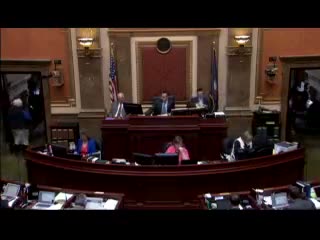
The Utah House on Jan. 29 approved First Substitute House Bill 17, changing how local governments may enforce unpaid assessment-area liens by eliminating ordinance forfeiture and non-judicial trustee foreclosures and replacing the non-judicial remedy with judicial foreclosure procedures.
Sponsor Representative Webb told the chamber the measure restores due process for property owners by ensuring a judicial process, a sheriff sale and a redemption period rather than allowing governments to remove property through ordinance or a non-judicial trustee sale. "We're gonna eliminate the forfeiture by ordinance ... and we will replace the non judicial foreclosure with judicial foreclosure," Webb said during his presentation.
The bill prompted an extended floor debate about the measure's effect on both involuntary (nonconsensual) and voluntary (consensual) assessment areas. Representative McKay and others asked whether the bill would apply equally to assessment areas created by unanimous participant agreement — a situation where private parties sometimes accept non-judicial remedies as part of financing terms. Webb and supporters said the amendment applies to both voluntary and involuntary areas to protect subsequent purchasers who may not understand the priority and foreclosure consequences tied to those liens.
Representative Coleman and others emphasized the bill's property-rights rationale. "It should be very, very difficult for anyone to take your private property," Coleman said in support, urging the House to preserve strong due-process protections against government seizure of property.
Supporters framed the change as aligning remedies with ordinary judicial foreclosure practice and restoring a balance between absolute lien priority and procedural fairness. Opponents raised concerns that the bill may interfere with negotiated contract provisions used in large privately financed developments, where lenders and borrowers sometimes prefer non-judicial remedies for speed and certainty.
After debate, the House voted to pass First Substitute HB 17 (vote recorded on the floor). The bill will be transmitted to the Senate for consideration.
The next step for HB 17 is its review and potential action by the Senate; the House floor record shows the measure passed the House and was sent to the Senate for consideration.