Get Full Government Meeting Transcripts, Videos, & Alerts Forever!
Get email alerts on the Election Law topic
No spam. Unsubscribe anytime.
House rejects election law revision that would shift mail-ballot deadline to receipt rather than postmark
Summary
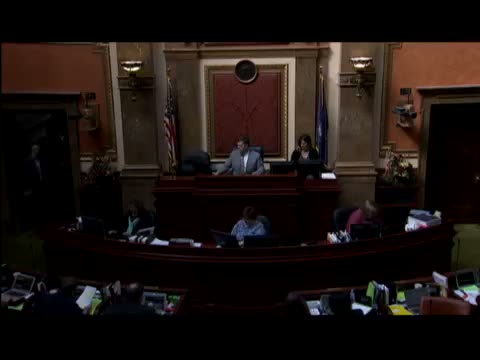
After extended floor debate about postmarks, drop boxes and voter confidence, the Utah House on March 3, 2017, voted 26–45 to defeat first substitute H.B. 314, a bill that would have clarified that a mail ballot is timely only if received by the election officer by Election Day rather than relying on a postal postmark.
Representative Tim Stratton, sponsor of first substitute H.B. 314, told colleagues the bill would clarify when mail ballots are valid and shift responsibility to voters to ensure ballots are received by election officers by Election Day. Stratton said the change responds to confusion in recent election cycles and cited a figure that roughly 57,000 ballots statewide were involved in timing questions during the last cycle.
"What House Bill 314 does is it establishes firmly this issue and clarifies it in an important way," Stratton said, arguing the proposal would protect the election process in tight races. He said the intent was to place responsibility on the voter to ensure timely receipt and to encourage use of drop boxes and other delivery options.
Opponents said the change would unfairly disenfranchise voters who rely on the postal service. Representative Gardner asked the sponsor whether the cited ‘‘57,000 ballots’’ figure meant that many ballots would have been ineligible under the proposal; Stratton rejected that assertion and said he expected most voters could comply under clarified rules. Representative Cutler and others warned that relying on receipt rather than postmark would push voters toward in-person delivery or drop boxes and that the postal service does not guarantee next-day delivery.
Representative Nelson raised concerns about signature verification burdens and delays caused by mail ballots, saying the current system has already delayed election results by days. Multiple members warned that shifting the deadline could invite constitutional challenges in tight contests.
After extended questioning, a motion to cut off debate was adopted and the House voted on the bill. First substitute H.B. 314 failed in a roll-call vote, 26 yes to 45 no. The sponsor urged colleagues to consider measures that reduce confusion around mail ballots; opponents emphasized access and reliability concerns. The House did not send the bill to the Senate.
The vote leaves in place the existing statutory and administrative deadlines that had been in effect for the most recent elections; Representative Stratton said he remains willing to work on clarifications and implementation options with counties and clerks.