Get Full Government Meeting Transcripts, Videos, & Alerts Forever!
Get email alerts on the Cybercrime topic
No spam. Unsubscribe anytime.
House approves substitute to stiffen penalties for cyber‑enabled attacks and 'swatting'
Summary
The House unanimously passed first substitute S.B. 118 to align penalties for crimes that use computers with penalties for comparable physical crimes, and to clarify language so routine communications providers are not inadvertently criminalized.
The Utah House voted unanimously to pass first substitute S.B. 118 (Criminal Law Amendments), a measure sponsors described as aligning penalties for cyber‑enabled misconduct with the harm caused and clarifying language to avoid ensnaring routine pipeline or communications delivery systems.
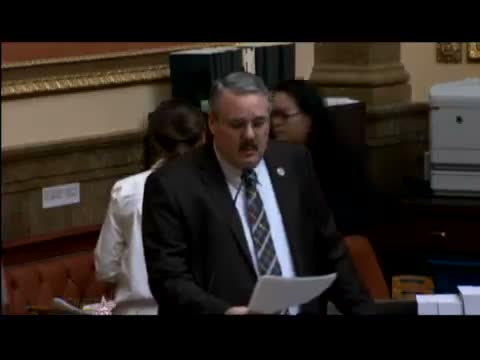
Sponsor remarks explained that the substitute corrects unintended consequences and tightens penalties so that a person who shuts down critical systems using a computer could face felony charges similar to those for physically damaging infrastructure. As one sponsor put it, "the crime that they're committing needs to match what they're doing." The sponsor also cited several examples, including "swatting" incidents in which false reports trigger dangerous law‑enforcement responses; the bill aims to ensure penalties reflect the severity and potential harm of those actions.
The House moved to substitute and the motion passed; first substitute S.B. 118 received a recorded vote of 69 yeas and 0 nays and will be sent to the Senate for consideration. Supporters described the change as restoring parity between computer‑enabled and physical attacks while protecting ordinary communications providers by explicitly excluding pipeline delivery systems from unintended coverage.
The bill passed after sponsors described edits made to address concerns raised during committee and interchamber review. First substitute language was accepted on the floor and the measure passed without recorded opposition.