Get Full Government Meeting Transcripts, Videos, & Alerts Forever!
Get email alerts on the Criminal Justice topic
No spam. Unsubscribe anytime.
Utah House rejects bill to inform jurors of potential penalties
Summary
First Substitute House Bill 332, which would have allowed jurors to be informed of potential penalties, failed on the House floor after extended debate about the role of juries and judges. The measure was defeated 29–45.
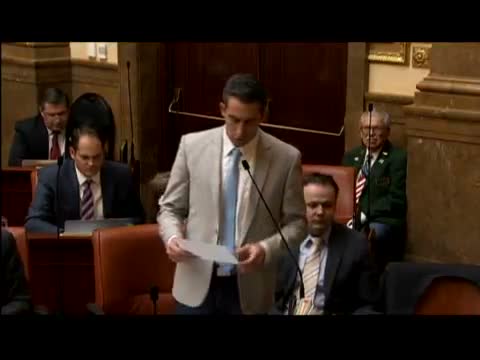
Representative Roberts brought first substitute House Bill 332 to the floor on March 3, 2017, saying the measure removes controversial points and ‘‘leaves only the portion which informs jurors of the potential penalty of a guilty verdict’’ so jurors are not ‘‘left in the dark.’’
Supporters argued juror awareness is part of the historical role of juries. Representative (proponent) said states such as North Carolina provide similar notices and framed the change as restoring an earlier practice: "We're taking this back now to what was constitutionally ruled then." Representative Roberts also cited Utah Constitution Article I, Section 2 in his defense.
Opponents told a very different story. Representative McHale said the proposal represents "a colossal shift" that risks asking jurors to apply the law rather than simply find the facts: "A jury's role is to find the facts, it's a judge's role to apply the law." Representative Cutler and others said the change needed more study and warned it could produce inconsistent results or discourage victims from reporting.
Members questioned practical effects: whether jurors could lawfully recommend lesser sentences, whether knowing a potential maximum would discourage convictions, and whether prosecutors or defense attorneys would alter charging practices in response. In the end, the House opened and closed voting on the measure; first substitute HB 332 received 29 yes votes and 45 no votes and failed to pass the body. The bill was referred to staff to be filed.
Next steps: the sponsor indicated willingness to study the issue further; no immediate committee assignment or amendment plan was announced on the floor.