Get Full Government Meeting Transcripts, Videos, & Alerts Forever!
Get email alerts on the Outdoor Recreation Funding topic
No spam. Unsubscribe anytime.
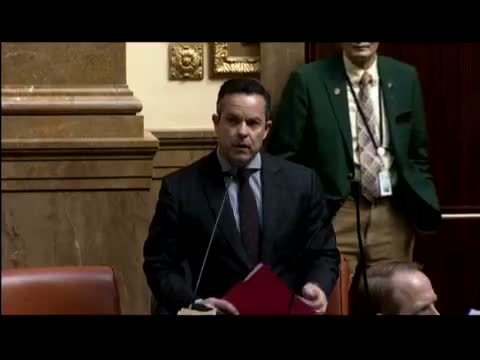
Utah House approves Outdoor Recreation Grant Program, creating statewide TRT fund
Summary
The House passed the second substitute to Senate Bill 264 to create an Outdoor Recreation Infrastructure Fund financed through a statewide transient room tax vehicle and an Outdoor Recreation Grant Program; the measure passed 44–29 after extended debate over hospitality taxation and program scope.
The Utah House of Representatives on the afternoon calendar passed the second substitute to Senate Bill 264, creating an Outdoor Recreation Infrastructure Fund and an Outdoor Recreation Grant Program funded through a statewide transient room tax (TRT) mechanism and administered with an advisory committee.
Representative Wilson, sponsor of the substitute, said the fund will be used to build trails, walking paths, climbing routes, boating and adaptive-sports programs and other recreation infrastructure around the state. "For a small fee, in these, 30 to 50¢ a night, you're going to see tremendous infrastructure built across the state," Wilson said during floor remarks, arguing that out-of-state visitors would shoulder much of the cost.
Supporters framed the program as a response to rising tourism and strained recreation infrastructure. Representative Stannard, who represents Southern Utah, warned that attractions such as Zion National Park face capacity pressure, noting the park's increasing visitation and saying the state needs concentrated investment in trails and parks.
Opponents said the proposal singled out the hospitality industry to pay for the program. One speaker who identified a conflict of interest argued the change would amount to "the fifth tax on hospitality," warned of compounding levies and urged caution before imposing another fee on hotels and lodging businesses.
The substitute adds a sunset provision and an education component for the hospitality industry, including an estimated $300,000 ongoing allocation for program development. Representative Wilson said the state currently directs $21,000,000 annually to the Tourism Marketing Performance Fund (TMPF) and cited an annual tourism economic impact figure of about $8,000,000,000 in support of leveraging visitor-funded revenue for infrastructure.
After roughly an hour of debate and several members’ questions about program size, administration and hotel impacts, the house voted 44–29 in favor of the second substitute; the measure will be transmitted back to the Senate for further consideration.
What happens next: The bill returns to the Senate for any action there. The substitute contains a sunset and authorizes the state school board or another designated office to manage related education grants via an RFP, but the floor debate left implementation details—particularly the grant application and RFP timeline—unresolved on the House floor.