Get Full Government Meeting Transcripts, Videos, & Alerts Forever!
Get email alerts on the Local Government Penalties topic
No spam. Unsubscribe anytime.
House limits municipal ability to issue misdemeanors, passes SB251
Summary
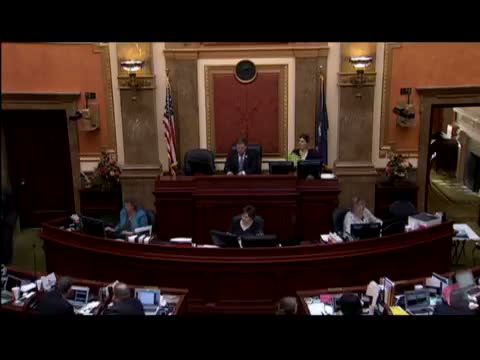
The Utah House on March 9 passed Senate Bill 251 to restrict municipalities’ authority to issue class B misdemeanors (which can carry jail time) through civilian code enforcers, instead steering many violations toward civil infractions; the bill passed 60–11.
The Utah House on March 9 passed Senate Bill 251, a measure that narrows local governments’ ability to use class B misdemeanors for code and traffic enforcement and shifts many such violations toward civil infractions.
Representative McKay, the House sponsor, told colleagues the bill "limits the ability to cite for class B misdemeanors," noting that class B misdemeanors can expose residents to potential jail time and the heightened criminal-defense requirements that follow. McKay said the change aims to protect defendants’ rights and provide municipalities time to adapt through a delayed effective date.
During questioning, Representative Kristofferson pressed the sponsor on operational effects, asking whether the bill would prevent civilian animal-control officers from issuing class B misdemeanor citations and whether cities would need to make those officers sworn peace officers or revise ordinances. McKay confirmed non-sworn officers "will not be able to issue a citation that is a class B misdemeanor" and said municipalities could instead convert violations into infractions or change personnel status.
Representative Weil cautioned that the change could shift enforcement burdens to police. "We no longer want code enforcers to go out and enforce our codes. We want the police," Weil said, arguing that requiring police to handle more routine code work could overburden law enforcement and not necessarily achieve the intended public-safety outcome. Weil recommended a narrower approach that limits when municipalities may use class B misdemeanors rather than broadly removing the authority.
Representative Winder spoke in support, citing municipalities that have already used similar approaches successfully and the conceptual backing of the Commission on Criminal and Juvenile Justice (CCJJ). McKay closed by listing supporting stakeholders, including local government associations and law enforcement, and reiterated that the bill's goal is to move low-level enforcement from criminal to civil handling.
The House approved SB251 by a recorded vote of 60 yay and 11 nay. The bill will be returned to the Senate for further consideration and signature by the president of the Senate.