Get Full Government Meeting Transcripts, Videos, & Alerts Forever!
Get email alerts on the Government Records Access topic
No spam. Unsubscribe anytime.
House approves GRAMA changes to limit inmate records requests to five per agency per year
Summary
The House passed first substitute Senate Bill 242, limiting incarcerated individuals to five Government Records Access and Management Act requests per government entity per year, creating local appeal boards and extending response time to 10 days; attorneys retain unlimited access. Vote: 68–7.
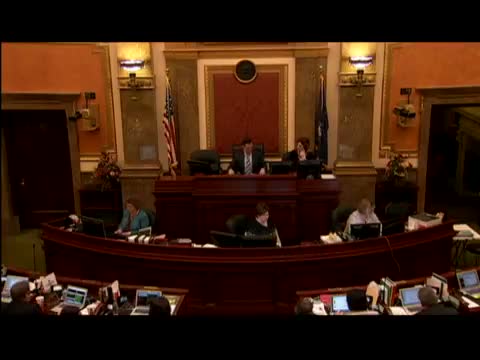
The Utah House on the floor approved amendments to the Government Records Access and Management Act that restrict the number of records requests incarcerated people may submit to state and local agencies.
Sponsor Representative Dunnegan said the measure targets a small number of repeat requesters who strain agency resources while preserving access for legitimate cases. "They will be allowed 5 requests per year per governmental entity," Dunnegan said on the floor, noting attorneys representing inmates retain unlimited access.
The bill’s sponsor cited internal data showing the bulk of inmate requests are not widespread: about 80% of inmates do not use GRAMA and inmates account for 54% of all requests; the top 10 inmate requesters submitted 1,676 requests since February 2011, and one individual filed 300 in a single year.
The substitute does four main things: it caps routine requests by incarcerated individuals at five per government entity per calendar year; it leaves attorneys able to make unlimited requests on their clients’ behalf; it requires local appeal boards with non-employee public members to hear disputes; and it gives the state records office 10 days to issue rulings unless expedited review is justified in the public interest. The bill also directs that judges resolving appeals act without remanding matters back to the state records office.
Supporters described the bill as a balance between preventing administrative abuse and preserving access for legitimate legal needs. Representative Hemingway and a physician who works in jails spoke to different practical effects: some inmates use requests to assemble evidence for counsel, while others file repetitive, burdensome requests. Representative Green and others urged reworking language to avoid creating additional barriers for indigent or unrepresented inmates.
After debate, the House voted to pass first substitute Senate Bill 242, Government Records Access and Management Act Amendments, by a recorded vote of 68 yes, 7 no. The bill will be sent back to the Senate for signature.
The measure includes appeal-board composition requirements and a 10‑day state records response period; agencies retain discretion to respond to more than five requests if they choose. The bill’s sponsors said it was developed with the Utah Media Coalition, the ACLU, the Attorney General’s Office and the State Records Committee.