Get Full Government Meeting Transcripts, Videos, & Alerts Forever!
Get email alerts on the Rural Economic Development topic
No spam. Unsubscribe anytime.
House passes Rural Jobs Act aimed at drawing capital and positions to rural Utah
Summary
The House approved third substitute Senate Bill 267, a rural jobs tax‑credit program intended to channel private investment to small businesses off the Wasatch Front; sponsors estimated the bill would generate roughly $40 million in capital, while debate centered on which counties qualify and waiver rules. Vote: 63–6.
SALT LAKE CITY — The Utah House on March 7 passed third substitute Senate Bill 267, the Utah Rural Jobs Act, a targeted tax‑credit program designed to incentivize private investment and job creation in counties outside the Wasatch Front.
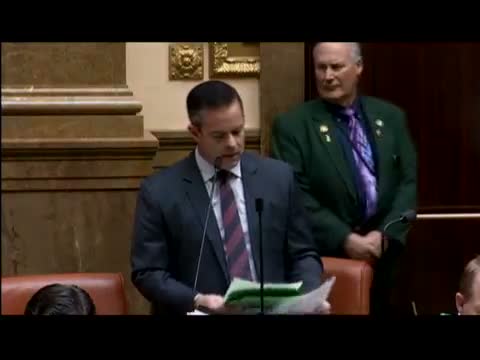
Sponsor Representative Wilson framed the bill as a rural economic tool, saying it mirrors a previously successful program and will help channel capital to areas that struggle to attract private investment. “This bill will generate $40,000,000 of capital investment in business off the Wasatch Front,” Wilson said in his presentation.
The bill authorizes tax credits to licensed investors and lenders who deploy capital to qualifying small businesses in designated rural counties, with credits phased and claimed after capital is deployed and jobs are created. Wilson and supporters said the program specifically targets off‑Wasatch communities where community banks and other local capital sources have declined.
Floor debate focused on which counties should be eligible under the bill. Representative Nelson and others asked why some adjacent counties, such as Tooele and Summit, were excluded; sponsors said the changes were made at the governor’s request to focus benefits on more remote rural areas but noted waiver provisions that could allow eligibility in parts of excluded counties with lower incomes.
Representatives from rural districts urged passage as a means to keep businesses and workers in their communities. Representative Owens, who represents a low‑income rural county, said the bill would help local economies and asked colleagues to support it. After floor amendments and debate the House passed the third substitute by a tally announced as 63 yea, 6 nay. The bill will be returned to the Senate for further consideration.
Implementation will require guidance on eligibility boundaries, waiver administration and verification of job creation before credits can be claimed.