Get Full Government Meeting Transcripts, Videos, & Alerts Forever!
Get email alerts on the Air Quality Fuel Policy topic
No spam. Unsubscribe anytime.
Utah House approves sales‑tax exemption to push refineries toward Tier 3 fuel
Summary
The Utah House passed third substitute Senate Bill 197 to offer sales‑tax exemptions to refineries that convert production to cleaner Tier 3 gasoline by 2020; supporters said the move could sharply reduce particulate pollution along the Wasatch Front while critics pressed on cost and oversight. Vote: 72–0.
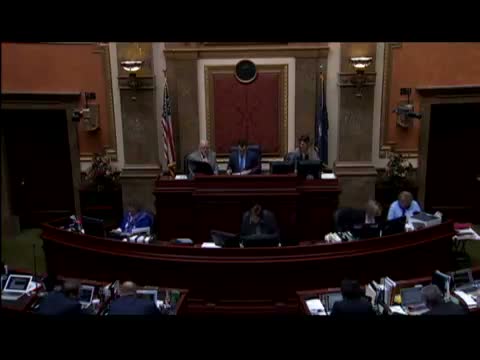
SALT LAKE CITY — The Utah House on March 7 passed third substitute Senate Bill 197, creating a sales‑tax exemption for in‑state refiners that adopt equipment and produce Tier 3 gasoline by 2020.
Sponsor Representative Wilson told colleagues the measure is designed to produce a meaningful improvement in air quality on the Wasatch Front by giving refineries an incentive to invest in technology that reduces particulates. “If every vehicle along the Wasatch Front were using Tier 3 fuel, it's the equivalent of removing four out of five cars off the roads,” Wilson said during his floor presentation.
The bill phases in an exemption beginning Jan. 1, 2018, and conditions continued tax relief on refiners’ production of Tier 3 fuels by 2020. Sponsors described the exemption as a time‑limited incentive tied to specific equipment purchases and production benchmarks; they also said the measure narrows the kinds of short‑lived operating purchases that qualify so the subsidy cannot be claimed for ordinary day‑to‑day expenses.
During floor debate lawmakers questioned the fiscal impact and the safeguards to prevent abuse. A member of the floor said the program would cost the state roughly $1.6 million per year for about three years; proponents countered that independent estimates show a low cost per ton of emissions reduced compared with prior proposals, and they argued the long‑term public‑health benefits justify the incentive. Representatives also noted refineries would need to make tens of millions of dollars in capital investments to convert production lines to Tier 3.
Representative Brian King and others said they supported the bill but pushed for clarity on qualifying purchases and mechanisms that would require repayment if a refinery accepted credits but failed to meet production milestones. Sponsor Wilson pointed to provisions in the bill that would require increasing efficiency of fuels and explained that failing to achieve Tier 3 production by the deadline would result in loss of the exemption.
The House voted to pass the third substitute of SB 197 by a recorded tally announced from the floor as 72 yes, 0 no. The bill was signed by the Speaker and will be returned to the Senate for further action.
The next step is Senate concurrence and implementation details from state tax and environmental agencies on how the exemption will be verified and administered.