Get Full Government Meeting Transcripts, Videos, & Alerts Forever!
Get email alerts on the Education Assessment topic
No spam. Unsubscribe anytime.
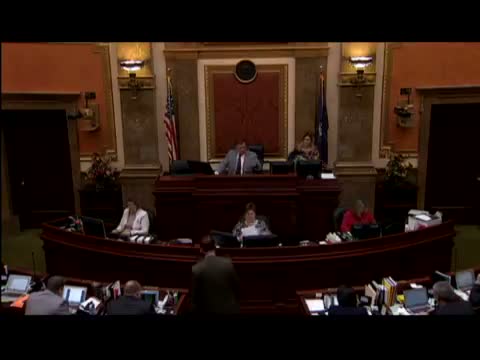
House passes amended SB220 shifting assessments to ACT and delaying letter grades
Summary
The Utah House on March 7 passed the first substitute of Senate Bill 220, replacing some SAGE tests with ACT Aspire/ACT, reweighting accountability to focus on the lowest-performing 25%, and adopting a one-year hiatus on summative letter grades for some schools; the vote was 56–18.
The Utah House voted 56–18 on March 7 to approve the first substitute of Senate Bill 220, a wide-ranging revision of the state's student assessment and school accountability system. The bill moves 9th- and 10th-grade assessments away from SAGE toward ACT Aspire as a preparation test and uses the ACT in 11th grade. Sponsors said the change explains the bulk of the bill's fiscal note and aims to align high-school testing with college- and career-readiness measures.
The bill also reworks how schools are evaluated. Lawmakers said they retained growth and proficiency measures but added a specific focus on growth among the lowest-performing 25 percent of students and a separate measure for English learner progress. The legislation adds indicators tied to advanced coursework'such as Advanced Placement, concurrent enrollment, International Baccalaureate and career and technical education pathways'and directs the State Board of Education to set criteria and produce a multi-indicator report card.
Supporters, including House sponsor Representative Last, said the new mix of measures and the switch to ACT-based testing will reduce the 'zip code' effect that critics say has skewed earlier accountability systems and give educators clearer, criterion-based benchmarks. "We're moving away from a normative curve and toward criteria established by the State Board," Last said in floor remarks.
Opponents argued the bill still imposes a single letter grade that can stigmatize schools serving high proportions of English learners, Title I students and recent immigrants. Representative Paulson and others urged eliminating letter grades entirely; Representative Greene questioned repeated legislative intervention in matters the constitution assigns to the elected State Board of Education. "This type of micromanaging by this legislative body looks a lot like general supervision and control, which the constitution specifically delegates to a 15-member Board of Education," Greene said.
In the course of debate lawmakers adopted an amendment (moved by Representative Owens) to extend a one-year hiatus on summative letter grades for elementary and junior high schools, giving districts and the State Board time to gather baseline data for the new accountability dashboard. Supporters described the amendment as a compromise to ease implementation and allow the State Board to develop scoring criteria before schools receive summative grades.
The House considered, rejected and then returned to competing substitute proposals. A motion to adopt a second substitute that would have removed letter grades failed, 27–45; the House then approved the first substitute as amended, 56–18. The bill will be transmitted back to the Senate for further consideration.
The next procedural step is transmittal to the Senate; supporters and opponents both said they expect further negotiation. The House adjourned and will reconvene March 8 at 8 a.m.