Get Full Government Meeting Transcripts, Videos, & Alerts Forever!
Get email alerts on the Voter Privacy topic
No spam. Unsubscribe anytime.
House narrowly approves change allowing registered voters to mark records private
Summary
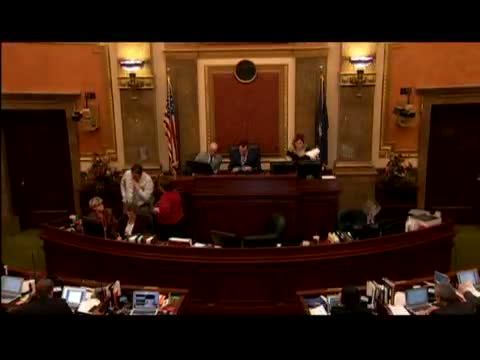
The Utah House approved a second substitute to H.B. 348 that lets any registered voter proactively request their voter record be made private without providing police or court evidence; the measure passed by a single vote (38‑37) after floor debate on privacy, access and potential effects on voter lists.
By a single‑vote margin the Utah House adopted a second substitute to House Bill 348 on March 6, allowing any registered voter to request that their voter registration record be designated private without first providing a police report or court order.
Representative Edwards, sponsor, said the substitute preserves current public access for entities that purchase voter lists while allowing individuals to proactively protect their personal identifying information. "We're simply allowing people to proactively make that designation of privacy of their records if they feel that they are at threat," Edwards said on the floor, describing the change as a way to avoid revictimizing victims who otherwise must provide proof of victimization.
Opponents said the change is a major policy shift that could enable widespread removal of names from public lists and should have received more deliberation. Representative Arendt warned the floor that "anyone for any reason can ask to have their records made private," and said the change deserved more study before final passage. Representative Brian King and others urged additional process and expressed concern about possible manipulation by third‑party actors assisting voters to opt out.
Floor debate included questions about the bill's mechanics: the sponsor said the prior requirement that voters provide evidence to the lieutenant governor or county clerk would be struck and lines 195 through 204 in the same bill remove those verification requirements, putting the decision in the hands of each voter.
The House adopted the second substitute on a close roll call (38‑37). The floor record shows the bill was substituted and the second substitute passed; it will be transmitted to the Senate for consideration.