Get Full Government Meeting Transcripts, Videos, & Alerts Forever!
Get email alerts on the Criminal Justice Sentencing topic
No spam. Unsubscribe anytime.
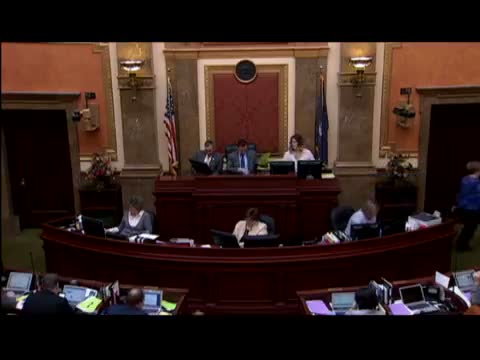
House passes substitute to ease mandatory sentences for narrow subset of sexual-offense cases, prompting strong floor debate
Summary
The House approved a second substitute to HB 222 allowing judges limited discretion in sentencing certain offenders age 21 or younger for some sexual-offense statutes. Supporters framed the change as narrowly targeted; opponents warned it weakens mandatory protections for child-victims. The measure passed 42-31 and will move to the Senate.
Representative Handy presented the second substitute to House Bill 222, which creates a framework under which a court may impose a lesser term than otherwise mandatory for certain sexual-offense convictions if the defendant was age 21 or younger and the court makes required findings.
Supporters, including Representative Nelson and others, described the substitute as a calibrated approach to give judges discretion in a small subset of cases (for example, young offenders and single offenses) so the law does not impose the same maximum mandatory sentence on all offenders regardless of context. “All we're trying to do with this bill is to separate out 1 little subset,” one supporter said, arguing judges should have some room to impose proportionate sentences.
Opponents — including Representative Ivory and other speakers representing victim constituencies — urged caution, stressing the severity of child sexual offenses and reminding the House of harrowing constituent accounts. They warned that distinguishing based on defendant age without explicit distinctions by victim age or offense gravity could endanger victims and undermine public safety.
Floor exchange clarified that the substitute creates a menu of possible terms (for example, 6, 10, or 15 years) a judge could impose under certain statutory findings, while preserving the possibility for a judge to impose the existing 25-year term in serious cases. The sponsor and supporters said legislative intent and a statutory framework were added to guide judges’ discretion.
After extended discussion and emotional floor debate, the House voted to pass second substitute HB 222, 42-31, and transmitted it to the Senate.