Get Full Government Meeting Transcripts, Videos, & Alerts Forever!
Get email alerts on the Education Safety topic
No spam. Unsubscribe anytime.
Utah House narrows circumstances for physical restraint in schools, passes HB92
Summary
The House passed HB92 to limit seclusion and physical restraint in schools to situations where a student poses danger to self or others, following sponsor testimony about subcommittee work, parent concerns and expert support. The bill passed 74–1.
The Utah House passed House Bill 92, a measure that narrows when schools may use physical restraint and seclusion on students, particularly those with disabilities.
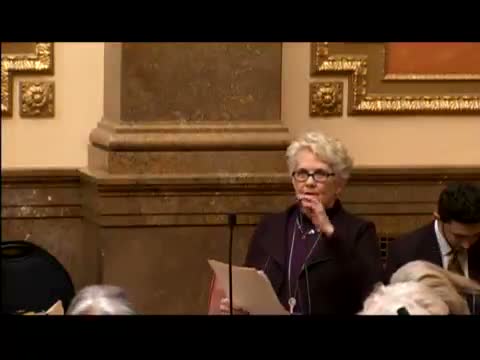
Sponsor Representative Carol Spackman Moss told the chamber the bill grounds the rule in a clear standard: physical restraint and seclusion may be used only when a student poses a danger to themselves or others, or to obtain a weapon or dangerous object. Moss said the change responds to parent complaints and a months-long state board subcommittee review and is consistent with national research and the recommendations of disability advocates.
"Physical restraint is a hold that immobilizes a child and puts that child at risk of injury or death," Moss said during her presentation, citing incidents nationwide and parental concerns (sponsor remarks).
In floor debate, members asked how the bill affects teacher liability and whether it allows teachers to act spontaneously in emergencies. Moss responded that teachers should not be faulted for acting in the moment to protect students or staff and that disciplinary and hearing processes remain available when complaints arise. Supporters including Representative Jefferson Moss and former educators emphasized training and the need to protect both students and staff. Opponents worried about the burdens on educators in split-second situations.
After discussion and summation by the sponsor, the House voted to pass HB92 as amended, 74 yes to 1 no; the bill will be transmitted to the state Senate for consideration.