Get Full Government Meeting Transcripts, Videos, & Alerts Forever!
Get email alerts on the Legislative Calendar Roundup topic
No spam. Unsubscribe anytime.
Utah House advances broad package of bills ranging from tax appeals to public safety
Summary
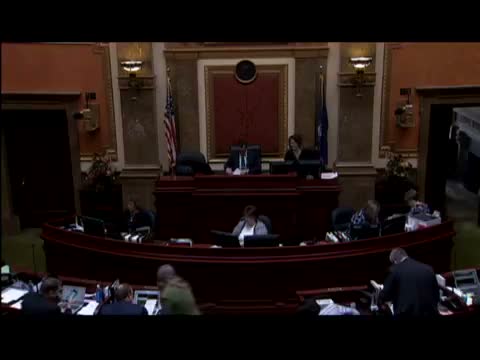
The Utah House on Feb. 27 approved a broad slate of bills — from property-tax appeal rules and land-use clarifications to criminal and health-code changes — and sent them to the Senate. Vote counts ranged from unanimous passage to divided margins on higher-profile items.
The Utah House of Representatives on Feb. 27 passed a series of bills addressing property-tax appeals, land use, contractor licensure, mobile-home protections, teacher incentives, mental-health procedures and criminal statutes, and referred each measure to the Senate for consideration.
Major outcomes included unanimous or near-unanimous passage of several technical and policy measures: first substitute HB 47, which clarifies appeals for Greenbelt (farmland) tax determinations and requires counties to notify applicants of incomplete filings (passed 67–0); HB 232, clarifying the Land Use, Development, and Management Act and distinguishing administrative from legislative local actions (passed 74–0); HB 279, expanding transparency and refund processes for municipal impact fees (passed 75–0); and HB 299, which updates civil-commitment language and transportation guidance for crisis evaluations in mental-health cases (passed 73–0).
The House also approved policy changes that prompted extended floor debate. First substitute HB 313 reduces two licensure requirements for specialty contractors (removing a two-year work-experience rule and a testing requirement while retaining insurance and course requirements); it passed 72–2. Second substitute HB 236 strengthens mobile-home park residents’ rights, requiring written leases, accessible lease copies and a resident’s civil remedy for park violations; it passed 74–0.
On education policy, second substitute HB 212 creates a pilot incentive program to pay $5,000 bonuses to teachers in high-poverty schools who meet a median growth percentile threshold (MGP ≥70), with districts asked to match half the bonus; the House passed the measure 51–23 after debate over the metric’s narrowness and effects on teacher evaluation and retirement credit.
The chamber also passed HB 17, which explicitly defines strangulation within the aggravated-assault code (71–2); HB 173, creating a parental-kidnapping offense for withholding a child absent a court order (72–0); second substitute HB 253, which clarifies short-term rental advertising and leaves certain land-use decisions to local subdivisions (71–1); and HJR 12, a joint resolution calling for state conversations on congressional term limits (45–27).
Finally, the House approved a bipartisan rules resolution (second substitute HR 2) updating internal procedures, clarifying who may be on the floor without lobbying and allowing the House Rules Committee, under 24-hour notice, to act as a standing committee on other matters in limited circumstances; that resolution passed 58–12 and takes effect immediately.
Most roll-call tallies were read aloud by the presiding officer after each vote; the House adjourned at the close of its afternoon session and is scheduled to reconvene Feb. 28 at 10 a.m.