Get Full Government Meeting Transcripts, Videos, & Alerts Forever!
Get email alerts on the Public Lands topic
No spam. Unsubscribe anytime.
House approves Public Land Management Act amendments setting state policy if lands transfer
Summary
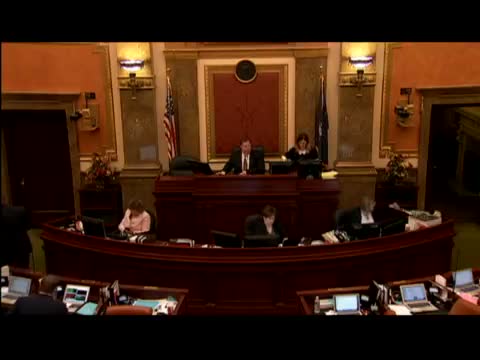
Second substitute HB407 passed the House 54-12 after an extended floor presentation. The measure outlines state policy preferences (favor exchanges over sales), requires a two-thirds legislative vote for sales over 100 acres, and sets governance steps for a state land-management structure should transfers occur.
The House passed second substitute HB407 (Utah Public Land Management Act amendments) on Feb. 28 after extended floor discussion focused on preserving public ownership and outlining state processes in the event of land transfers.
Sponsor Representative Noel described the bill as reaffirming the state's policy to retain public lands in public ownership and to prefer exchanges over sales. The bill would, if lands were transferred to the state, limit the ability to sell parcels larger than 100 acres without a two-thirds legislative vote and require hearings and public engagement prior to major disposals. It also addresses grazing policy, a conservation officer role with cooperative enforcement responsibilities with county sheriffs, and a nominating/confirmation process for the department director (a nominating committee of counties proposing three candidates to the governor, with Senate confirmation required).
Noel framed the bill as a statutory framework to manage public lands responsibly and to counter what he called erroneous public claims about selling public lands. He referenced recent federal-level debate and confirmation proceedings (naming a Senate confirmation hearing for Ryan Zinke) as part of the broader context for state-level planning.
The House approved the second substitute by voice and recorded vote, with the clerk announcing: 'Second substitute House Bill 407 having received 54 yay votes, 12 nay votes passes the House and will be referred on to the Senate for further consideration.'