Get Full Government Meeting Transcripts, Videos, & Alerts Forever!
Get email alerts on the Higher Education topic
No spam. Unsubscribe anytime.
House rejects campus sexual-violence bill after debates over victim confidentiality and institutional reporting
Summary
Representative Coleman’s HB3 26 (Campus Sexual Violence Protection Act) drew extended debate about when a university can report alleged assaults to law enforcement and whether that reduces victims' willingness to report; an amendment was adopted on the floor but the bill failed the House 32-38 and was referred to staff.
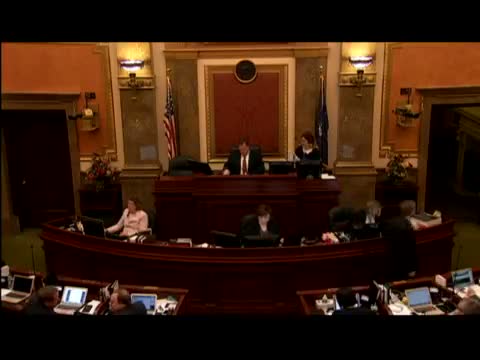
The House considered second substitute HB3 26, the Campus Sexual Violence Protection Act, on Feb. 28. Sponsor Representative Coleman said the bill addresses a tension between protecting alleged victims’ confidentiality and allowing institutions to act when there is an articulable risk to campus safety.
Coleman said the bill uses guidance from the U.S. Department of Education’s Office for Civil Rights around Title IX to set a high bar for institutional reporting while preserving victim confidentiality in most cases. "We cut and pasted their language," Coleman said on the floor, describing categories such as history of violence, multiple perpetrators and perpetrator threats that could justify institutional reporting.
Several members opposed the bill citing evidence that taking control of reporting from victims reduces reporting overall. A member who circulated material from Dr. Julie Valentine (BYU) argued that empirical research shows that eroding victims’ sense of control dramatically lowers the likelihood they will come forward at all. "If you have significant erosion ... you decrease dramatically ... the likelihood that they ever come forth at all," the speaker said.
Representative Ivory moved Amendment 1 to clarify notice provisions; the amendment was adopted on the floor. Ivory also urged support for the amended language, saying institutions need a mechanism to report where there is a credible threat to campus safety: "If you knew there was a Ted Bundy on your campus, would an institution not have a duty ... to the safety of the campus?" he asked.
During floor Q&A sponsors and members discussed whether institutions already had discretion to report dangerous situations and whether the Board of Regents had endorsed this language; sponsors said the language provides clearer statutory authority and was developed with input from higher-education stakeholders, though some members said the Board had not officially endorsed the bill.
The Speaker announced the recorded vote: 'House Bill 3 26 having received 32 votes and 38 nay votes, fell to pass the House and will be referred to staff for filing.'