Get Full Government Meeting Transcripts, Videos, & Alerts Forever!
Get email alerts on the State Budget topic
No spam. Unsubscribe anytime.
Utah House advances base-budget bills, citing over $80 million in offsets and savings
Summary
Floor debate and substitutions advanced first-substitute base budgets for higher education, business/economic development, retirement entities, infrastructure and other state agencies; sponsors cited institutional efficiencies and specific appropriations totals while emphasizing the statutory deadline to pass base budgets.
The Utah House advanced several first-substitute base-budget bills on Feb. 6 as part of a concentrated effort to meet the legislative deadline for base budgets.
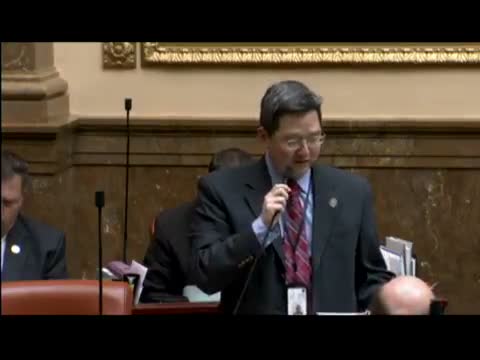
Representative Sanpei told the chamber the House had identified "more than $80,000,000 of base budget reductions and offsets" available for reallocation over coming weeks and emphasized the rules requirement that base budgets be passed by day 16. "So our intent is to deal with give those to the Senate," he said, describing a schedule to exchange base budgets between the chambers ahead of the deadline.
On higher education, Representative Grover presented first substitute HB 1, describing a process where institutions identified efficiencies—"we asked our committee and our institutions to... look into their budgets and look for any inefficiencies"—and noting a one-time $5,000,000 reduction in operations and maintenance. Grover said the institutions awarded 33,794 degrees and had an enrollment "account" of 117,474 students; he said the committee will review whether some restored funding is needed in follow-up appropriations work.
Representative Webb presented first substitute HB 4 (Business, Economic Development and Labor Appropriations Subcommittee), summarizing committee approvals totaling approximately $313,157,300 in operating and capital budgets, including roughly $100,415,600 from the General Fund and $21,507,600 from the Education Fund, and noting additions for performance criteria and certain cost adjustments.
Representative Christensen presented first substitute HB 5 (retirement and independent entities), reporting committee-generated savings and a proposed base of $14,513,700 (approximately $20,000 from the General Fund) and intent language requiring agencies to report performance measures by Oct. 31. Representative Froehler presented first substitute HB 6 (infrastructure and general government), saying the bill appropriates about $1.9 billion for FY2018, including significant portions from the education and transportation funds and changes to debt-service projections tied to bond activity and a planned prison project.
Each substitute was placed before the House under regular order; sponsors generally waived summation and the substitutes were approved on voice or recorded tallies and set to be transmitted to the Senate for consideration. The chamber recessed for lunch to reconvene later in the day.
Next steps: sponsors indicated follow-up appropriations committee work to reexamine restored funding as needed and performance reporting required by intent language.