Get Full Government Meeting Transcripts, Videos, & Alerts Forever!
Get email alerts on the Consent Calendar topic
No spam. Unsubscribe anytime.
Utah House approves broad consent calendar and concurrence items, sending multiple technical bills to the Senate
Summary
The Utah House passed a large consent and concurrence package including consumer-protection, real-estate, securities, transportation and licensing technical amendments; most measures were noncontroversial and passed overwhelmingly on voice or recorded tallies during the Feb. floor session.
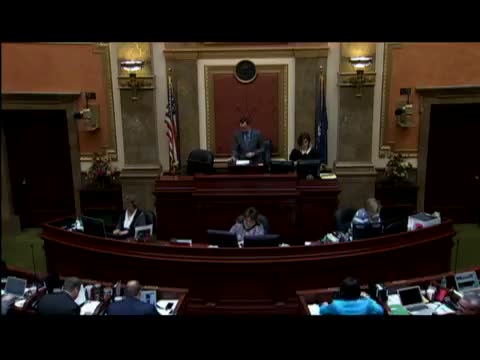
The Utah House of Representatives on Feb. 6 rapidly approved a package of mostly technical and regulatory bills on the consent and concurrence calendars, transmitting a string of measures to the Senate or returning Senate bills for signature.
Speakers summarized the bills briefly on the floor. Representative Frower described first substitute House Bill 196 as an annual cleanup for the Division of Real Estate that clarifies broker and sales-agent duties, including allowing a broker to manage up to three branch offices. "It's my pleasure to present, house bill 196 for a substitute," Frower said during his presentation.
Representative Val Peterson framed first substitute Senate Bill 33 as a consumer-protection cleanup that clarifies filing requirements and definitions and allows a district judge to impose fines in consumer-sales-practice cases. The House approved SB 33 (71 yes, 1 no). Representative Hall described HB 106 as a narrow correction to the Utah Uniform Securities Act to ensure damages calculations start at the purchase price; that bill passed 73–0.
Other measures approved included HB 210 (flashing brake light revisions), HB 182 (labeling requirements for certain retail goods), SB 55 (insurance and service contract clarifications), SB 57 (workers' compensation related premium assessments), HB 185 (Office of Licensing amendments regarding background checks for those working with vulnerable adults), SB 28 (repeal of obsolete Health and Human Services reports), HB 109 (public utility regulatory restricted account amendments), and HB 26 (revenue and taxation modifications), among others. Most of these passed on unanimous or near-unanimous votes and were transmitted to the Senate or returned to that body for signature.
Votes and formal outcomes recorded on the floor included: first substitute HB 196 (72 yes, 0 no); SB 33 (71 yes, 1 no); HB 106 (73 yes, 0 no); HB 210 (73 yes, 0 no); HB 185 (75 yes, 0 no); SB 28 (75 yes, 0 no); HB 109 (75 yes, 0 no); HB 26 (75 yes, 0 no). Several other bills on the consent calendar were approved by voice vote or unanimous tally as announced by the speaker.
The session included routine procedural business (committee reports and rules committee assignments) and brief sponsor presentations; most sponsors described their bills as "cleanup," technical fixes, or clarifications. The House recessed for lunch and planned to return at 2 p.m.
The House did not hold extended debate on these items; sponsors generally waived summation and the bills moved forward under regular order.