Get Full Government Meeting Transcripts, Videos, & Alerts Forever!
Get email alerts on the Daylight Saving Time topic
No spam. Unsubscribe anytime.
Utah House rejects bill to put nonbinding daylight‑saving question on 2018 ballot
Summary
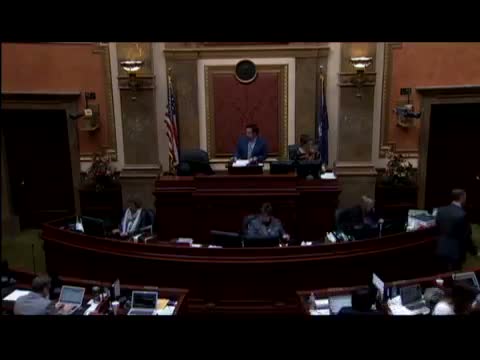
After a lengthy floor debate about representative duties and constituent input, the House defeated HB 78, a bill to authorize nonbinding opinion questions on ballots (the sponsor proposed a daylight‑saving time question). The measure failed 34–36.
Representative Neil Thurston proposed HB 78 as a vehicle to place a single, statewide nonbinding opinion question on the 2018 general election ballot about whether Utah should remain on standard time year‑round. Thurston said the approach would let “every registered voter in the state of Utah” register their preference precinct by precinct and would cost about $7,400 to add to the ballot.
Thurston framed the measure as responsive to constituent sentiment and public‑health research. He told colleagues that a GoEd online exercise had gathered 27,000 responses with two‑thirds favoring year‑round standard time and stressed the mental‑ and physical‑health impacts of clock changes: “changing clocks causes people to do something very odd which is to force your body to adjust to a new circadian rhythm,” he said.
Opponents said the bill would shift the legislature’s core responsibility to voters and set an undesirable precedent. Representative Ahrendts asked whether HB 78 actually changes statutory time policy or merely establishes a process; Thurston replied the bill is procedural and needs to pass for any tied resolution language to be placed on the ballot. Representative Sayers urged colleagues to reject the approach, saying it amounted to “an abrogation of our responsibilities.” Representative Nelson said the bill risks undermining representative government by normalizing nonbinding public ballots.
Thurston repeatedly emphasized the bill’s narrow scope and the sponsor’s intent to gather public input: “It’s called a non binding opinion question,” he said. He also reiterated that federal law prevents a state from unilaterally adopting year‑round daylight saving time, limiting options to staying on standard time year‑round or retaining the current clock change schedule.
After a call of the House and procedural activity to secure a recorded vote, HB 78 failed in final passage with 34 yes votes and 36 no votes. The House returned the bill to the clerk for filing.
The measure’s defeat leaves the question of daylight‑saving time unchanged and preserves the status quo for the 2017 session; supporters said they could revisit the issue with different vehicles or in a future session.