Get Full Government Meeting Transcripts, Videos, & Alerts Forever!
Get email alerts on the Housing Reentry topic
No spam. Unsubscribe anytime.
Utah House approves 'good landlord' changes restricting municipal bans on renting to people with criminal histories
Summary
After hours of floor debate and a contentious amendment, the House passed HB 178 to limit municipal power to penalize landlords who rent to people based on criminal history; an amendment carving out municipalities with halfway houses was adopted before final passage, 62–9.
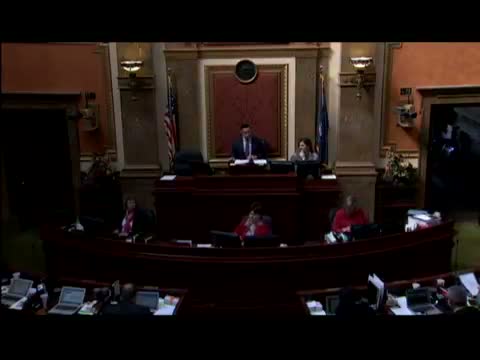
House members on Tuesday approved House Bill 178, a measure that curtails municipal authority to penalize residential landlords for accepting tenants with criminal histories, saying the change will help people re-entering society and protect private property rights.
Representative Jim King, the bill sponsor, said the measure removes a municipal tool that can keep formerly incarcerated people from finding housing and argued it supports the Justice Reinvestment Initiative’s goal of reintegration. “We need to get municipalities’ fingers off the scales,” King said.
Opponents warned the bill removes a local tool used by cities such as Ogden to manage geographic concentrations of people leaving correctional facilities. In floor debate, Representative Jeremy Peterson moved Amendment 1 to exempt municipalities that host halfway houses (identified in debate as Ogden and West Valley City). Peterson cited a local recidivism concern, saying about “50 percent of the inmates coming out of our Northern Utah criminal correction center reoffend,” and described Ogden’s local fee structure for its good-landlord program ($13 for participants versus $87 for nonparticipants) as a reason the city needs targeted tools.
The House initially debated whether the amendment should stand; after a division vote the membership adopted Amendment 1, 38–34. With the amendment in place, HB 178 then passed final passage on the floor, 62–9, and will be transmitted to the Senate for further consideration.
Lawmakers for the amendment and against it framed the issue as a balance between public safety tools for cities and landlords’ private-property rights. Supporters of the final bill argued it reduces stigma and housing barriers for people released from custody. Representative Michael Noel and others described local waiver or voucher programs as partial alternatives; proponents countered that those solutions are uneven across the state.
The immediate effect of the amendment is to preserve a carve-out for municipalities that host halfway houses; the amended bill otherwise limits municipal restrictions tied to a landlord’s participation in local 'good landlord' programs. The House record shows the amendment passed (38 yes, 34 no) and the bill then passed (62 yes, 9 no).