Get Full Government Meeting Transcripts, Videos, & Alerts Forever!
Get email alerts on the Judicial Selection topic
No spam. Unsubscribe anytime.
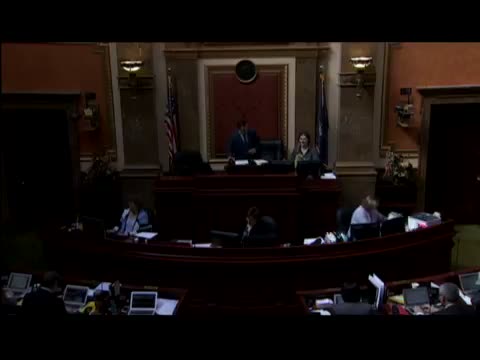
House approves bill to limit CCJJ rulemaking in judicial nominations; debate centers on diversity language
Summary
The Utah House on Feb. 14 passed HB 93, moving judicial qualification criteria into statute and curtailing the Commission on Criminal and Juvenile Justice's ability to set evaluation rules. Supporters said the change restores constitutional clarity; opponents warned it removes a diversity consideration now used by nominating commissions.
SALT LAKE CITY — The Utah House of Representatives on Feb. 14 approved House Bill 93, a measure that shifts judicial qualification criteria from administrative rules under the Commission on Criminal and Juvenile Justice (CCJJ) into state statute and restricts CCJJ’s ability to adopt further qualification criteria.
Sponsor Representative Nelson said the change is required to align practice with the Utah Constitution and to prevent an executive-branch body from setting standards he said belong to the legislature. “Selection of judges shall be based solely upon considerations of fitness for office,” Nelson said on the House floor, citing Article 8 of the Utah Constitution and arguing the statute should list the qualifications transparently.
Nelson’s amendment — adopted on the floor — inserted specific statutory criteria including legal knowledge, judicial temperament, professional experience, integrity, impartiality, work ethic, financial responsibility, public service and ability to perform judicial duties. He told colleagues the bill also removes any presumed rulemaking authority from CCJJ to create additional qualification criteria in the future.
Opponents warned the bill eliminates language now used by nominating commissions that permits consideration of an applicant’s background and experience "in relation to the current composition of the bench" when applicants are otherwise comparable. Representative Brian King, among others, said that element of the CCJJ rule helps ensure the bench reflects varied backgrounds and experiences. “When deciding among applicants whose qualifications appear in all other respects to be equal, it is relevant to consider the background and experience of the applicants in relation to the current composition of the bench,” King said, reading the existing rule’s language and urging the House to preserve it in statute.
Representative Wheatley said he would not support the change, arguing the selection process is not broken and that the existing rule’s diversity consideration plays an important role in juvenile and other court assignments. Representative Chavez Houck and Representative Snow also urged colleagues to consider the practical impacts on minority representation and fairness in the judicial system.
Nelson disputed that the CCJJ practice was lawful. “Under current practice, the CCJJ considers additional considerations like race and gender. They are not legally permitted to do so,” Nelson said on the floor, arguing the nominating commissions had effectively treated a hypothetical tie-breaker provision as open authority to favor candidates by background or gender.
The debate was lengthy and partisan. After floor discussion and a vote on the amended bill, HB 93 passed 47 yes to 25 no. The bill will be transmitted to the Senate for further consideration.
What happens next: HB 93, as amended, will proceed to the Utah Senate. If enacted, the law would codify the enumerated qualification criteria and limit CCJJ’s ability to adopt additional qualification rules by administrative action.