Get Full Government Meeting Transcripts, Videos, & Alerts Forever!
Get email alerts on the Congressional Address topic
No spam. Unsubscribe anytime.
Congressman Stewart tells Utah House that erosion of 'accepted truth' threatens democracy, urges civility and policy priorities
Summary
U.S. Rep. Stewart told the Utah House that the country's greatest danger is the erosion of accepted truth, urged graciousness and listening, and outlined priorities including tax reform, regulatory rollback, repeal-and-replace of the Affordable Care Act with protections for preexisting conditions, and rebuilding military readiness.
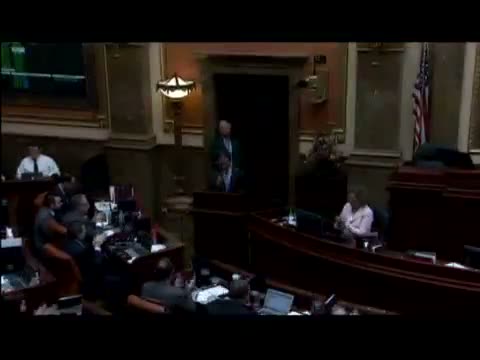
Congressman Stewart addressed the Utah House on Feb. 8, 2017, warning that the nation's "greatest danger" is that "there is no longer accepted truth in the world," and urging lawmakers to respond with "graciousness," respectful listening and truth-telling while pursuing concrete policy goals.
Stewart said that demonstrators have a role in public life but that elected leaders and the electoral process — not protest alone — are the means for governing. He argued for major tax reform, called the current tax system "horribly inefficient," and said reform would produce substantial economic gains. He repeated a long-standing pledge to repeal and replace the Affordable Care Act while preserving protections for people with preexisting conditions and allowing children to stay on family policies until age 26.
On national security, Stewart said the United States must rebuild and resupply its military. He noted long deployments and capability shortfalls — saying, by way of example, that the Air Force once had about 57 fighter squadrons compared with roughly 53 today and that some units are not combat-capable — and urged investment to restore readiness.
During a short question-and-answer period, Representative McHale asked whether the country is safer under the new administration. Stewart said the world may view the U.S. as more willing to lead, which can have positive outcomes, but stressed readiness gaps remain and will take time to address. Representative Hollands, representing a diverse district, told Stewart constituents felt divided and fearful; Stewart recommended civil discourse and listening to reduce anxiety.
When asked about the effect of the administration's travel/immigration actions on radicalization, Stewart said radicalization is a complex process and not usually driven solely by U.S. immigration policy, while conceding some policies can aggravate perceptions. He defended limited, time-bound restrictions from certain locations on the grounds of vetting difficulty, saying, "we simply can't vet them" in some cases.
Stewart often framed his remarks around four responsibilities for public life — graciousness, listening, truth-telling and duty — and closed by invoking a need to preserve liberty for future generations. He concluded with a personal note about imminent family events and upcoming overseas travel.
The House moved into and dissolved a Committee of the Whole to hear the talk; Stewart took a few questions and left after about 30 minutes.