Get Full Government Meeting Transcripts, Videos, & Alerts Forever!
Get email alerts on the Childhood Trauma topic
No spam. Unsubscribe anytime.
House endorses resolution urging trauma-informed approaches after hearing on adverse childhood experiences
Summary
House members unanimously passed a substitute to HCR10 encouraging identification and support for survivors of adverse childhood experiences (ACEs); sponsor framed the resolution as an awareness and prevention measure and described links between ACEs and later-life health and social problems.
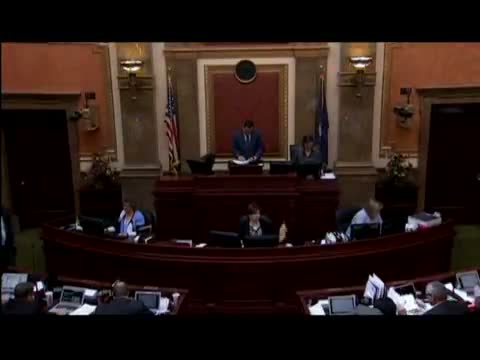
The Utah House on Feb. 15 adopted a first substitute to HCR10, a concurrent resolution encouraging identification and support for survivors of traumatic childhood experiences and urging trauma-informed practices across programs that serve children.
Representative Red, the sponsor, described the findings of the original ACE study and walked members through the resolution's checklist and the adverse outcomes associated with multiple ACEs, including poorer school performance, substance use, mental illness and a shorter life expectancy in people with high ACE scores. "If a person has four or more ACEs, they face a life expectancy that's shortened by as many as 20 years," Red said, urging members to "build fences at the top of the cliff" through early intervention and community mentoring.
Multiple members spoke in favor. Representative Holland said the measure lined up with work on homelessness and early intervention; Representative White said trauma impedes education and supported trauma-informed responses in schools. Representative Ivory asked about implementing evidence-based interventions for incarcerated populations; Red noted that identifying trauma and directing people to therapy and substance-use treatment are among the interventions, and he invited further study of successful programs in other states.
The House adopted the substitute and passed first substitute HCR10 by voice/recorded vote of 69 yes, 0 no; the resolution will be transmitted to the Senate.
What happens next: As a concurrent resolution, HCR10 expresses the House's position and encourages state agencies and local providers to adopt trauma-informed practices; it does not create a new funding program. The resolution will be transmitted to the Senate for consideration.
Attribution: Representative Red; Representative Holland; Representative Ivory; Representative White.
Ending: The House passed the substitute and sent HCR10 to the Senate 69-0.