Get Full Government Meeting Transcripts, Videos, & Alerts Forever!
Get email alerts on the Clean Fuel School Buses topic
No spam. Unsubscribe anytime.
House urges using Volkswagen settlement funds to replace dirty school buses
Summary
The Utah House on Feb. 8 passed a substituted concurrent resolution urging use of Volkswagen settlement funds to support replacing older diesel school buses, emphasizing children’s health and urging the Department of Environmental Quality and governor’s office to prioritize mitigation. Vote: 69-0.
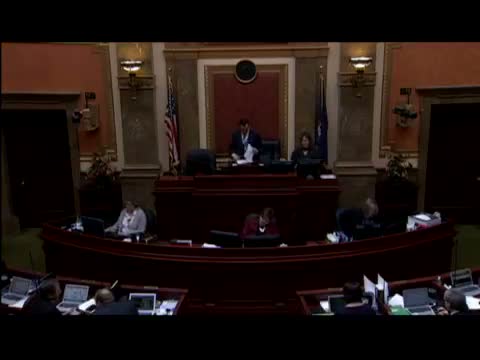
The Utah House of Representatives on Feb. 8 passed a substituted concurrent resolution urging state officials to prioritize using Volkswagen settlement funds to help replace older diesel-powered school buses.
Representative Rich Handy, sponsor of HCR 5, told colleagues the resolution is intended to encourage a ‘‘good faith’’ effort by the governor’s office and the Department of Environmental Quality to direct a portion of anticipated mitigation funds toward school-bus replacements and related infrastructure.
Handy said the state’s fleet includes roughly 2,800 school buses, about 450 of which were built in 2006 or earlier and are ‘‘dirty diesel’’ vehicles that contribute to air pollution and expose students to harmful particulates. ‘‘I was about ready to throw up my hands and give up until pennies from heaven came and Volkswagen cheated,’’ Handy told the House, referencing the federal settlement that may provide money to states for mitigation.
Why it matters: Lawmakers and public-health advocates in the chamber framed the resolution as a timely way to reduce students’ exposure to traffic-related particulate pollution and as a clear use consistent with the settlement’s focus on diesel emissions.
Supporters and process: Multiple representatives praised the governor’s office and DEQ staff for early work to evaluate uses of settlement funds and noted the state has already freed nearly $2 million for localized research and to reposition monitoring stations. Representative Hawkes, while supporting the resolution, warned lawmakers against prescribing how DEQ must spend mitigation money, saying the agency needs flexibility to identify the highest-impact interventions.
Equity and prior investments: Representatives asked whether districts that had already replaced buses should be prioritized or penalized. Handy said the measure takes a statewide perspective; districts will likely need to submit plans and matching funds to access mitigation dollars and that credit would be given to districts that already invested in replacements.
Funding and uncertainty: Handy and other speakers repeatedly noted key uncertainties: the settlement trustee had not yet been named, the total state share is estimated but not finalized (handouts referenced a potential $35,000,000 over several years), and detailed rules will be set by DEQ and through negotiations with federal oversight.
Floor action and outcome: After discussion and a waived summation, the House opened and closed the vote. The first substitute HCR 5 passed the House 69-0 and will be transmitted to the Senate for its consideration.
What's next: The resolution urges (but does not appropriate) that mitigation funds be used for school-bus replacements among other eligible diesel-mitigation projects; specific allocations and any implementing rules will depend on the federal settlement trustee, DEQ guidance, and future appropriations.