Get Full Government Meeting Transcripts, Videos, & Alerts Forever!
Get email alerts on the Cannabis Research topic
No spam. Unsubscribe anytime.
House OKs bill to permit IRB‑approved cannabis research, sponsors say 'cautious first step'
Summary
First substitute HB130 cleared the Utah House to let licensed IRBs approve cannabis‑based clinical studies and distinguish research products from in‑state production rules; sponsors called it a cautious, necessary step to gather data. Vote: 70–2.
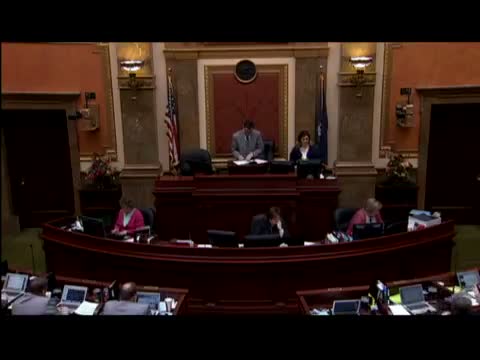
The Utah House passed first substitute House Bill 130 on Feb. 7, 2017, a measure designed to permit institutional review board (IRB)‑approved studies of cannabinoid products while imposing licensing and federal‑compliance requirements for import or handling of Schedule I substances.
Representative (sponsor) said the bill seeks to let scientific institutions test cannabis products’ benefits and risks under established federal IRB procedures, rather than allowing legislators to declare therapeutic uses. “We’ll let them play doctor,” the sponsor said, describing the approach as a cautious way to build an evidence base before any decision to formalize medical uses.
The discussion clarified funding and regulatory points. Representatives asked where seed funding would come from; the sponsor said a senator would seek appropriations to USTAR as seed grants and private donors were expected to contribute. Members also asked whether researchers would be constrained to specific CBD:THC ratios; sponsor explained the bill defines a 10:1 product for in‑state production rules but allows approved researchers to study any ratios. The sponsor noted existing research abroad (e.g., Europe and Israel) and that some limited non‑human research already occurs in Utah.
Members pressed how many IRBs in Utah could qualify; sponsor pointed to the University of Utah and several hospitals and said institutions with established IRBs would be the natural applicants and could petition the Department of Health for licensing. The sponsor said importation of cannabis for approved studies would require appropriate federal (DEA) licensing, and that there are already entities with such licenses.
Representative Roberts and others sought assurances that approval processes would be rigorous; the sponsor replied IRBs are federally licensed entities with standards and procedures to protect patients and scientific integrity. The House approved the bill 70–2 and transmitted it to the Senate.
Supporters characterized HB130 as a limited, research‑focused measure intended to produce reliable data before policy decisions. Opponents raised concerns about oversight and the net effect locally, but sponsors emphasized the role of IRBs and existing institutional research capacity.