Get Full Government Meeting Transcripts, Videos, & Alerts Forever!
Get email alerts on the Telehealth topic
No spam. Unsubscribe anytime.
Utah House approves telehealth bill after heated debate over abortion‑drug provision
Summary
The Utah House passed HB154 on Feb. 7, 2017, expanding telehealth standards and requiring insurer disclosure of coverage, after rejecting an amendment that would have removed a clause banning telehealth provision of abortion‑inducing drugs; vote was 56–15.
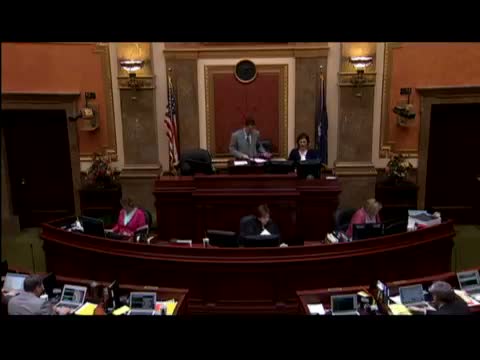
The Utah House of Representatives narrowly approved House Bill 154 on Feb. 7, 2017, adopting a package of telehealth amendments intended to strengthen standards of care, confidentiality and insurance disclosure for telemedicine services while explicitly refusing to allow abortion‑inducing drugs to be prescribed via telehealth.
Representative Mike Ivory, the bill sponsor, said the measure reopens work on reimbursement and standards the House considered last year and adds a disclosure requirement for insurers to state whether and to what extent they cover telehealth. Ivory argued the bill improves access for rural Utahns while maintaining appropriate limits on what may be provided remotely: “What this bill simply does is it provides the framework for scope and standard of care and confidentiality in the platform of telemedicine,” he said.
The most contested portion was language near the bill’s end excluding telehealth delivery of abortion‑inducing drugs. Representative Cheryl Arant proposed an amendment to remove that paragraph, arguing it does not belong in a telehealth bill and would likely invite costly litigation that could impede telehealth expansion. “Abortion restrictions do not belong in the telehealth bill,” Arant said during debate.
Supporters of the exclusion argued the restriction protects patient safety and reflects a policy judgment that certain procedures require in‑person contact. Representative Ivory described what he characterized as the medical risks of at‑home medication‑induced procedures and urged colleagues to retain the limitation: “We’re not extending telehealth to, like, brain surgery … We’re not extending it to a process that a woman would ingest a pill in the presence of a doctor,” he said during his summation.
Opponents warned the abortion‑drug prohibition could block telehealth benefits in rural communities and predicted legal challenges. Representative Hemingway, who opposed the restriction, cited testimony from gynecologists and an Idaho case that had been enjoined, saying the provision risked tying the bill up in court and preventing rural patients from accessing services.
The House voted down Arant’s amendment and then passed HB154 as presented, 56–15. Following the vote, sponsors and opponents said the next steps are likely to involve monitoring legal risks and tracking how the law affects delivery of telemedicine services in rural areas.
The bill’s passage does not itself create new funding but requires insurers to disclose telehealth coverage and establishes standards meant to facilitate reimbursement changes in the future. The measure now moves to the Utah Senate for consideration.