Get Full Government Meeting Transcripts, Videos, & Alerts Forever!
Get email alerts on the Article V Convention topic
No spam. Unsubscribe anytime.
Utah House Approves Resolution Calling for Convention to Amend U.S. Constitution
Summary
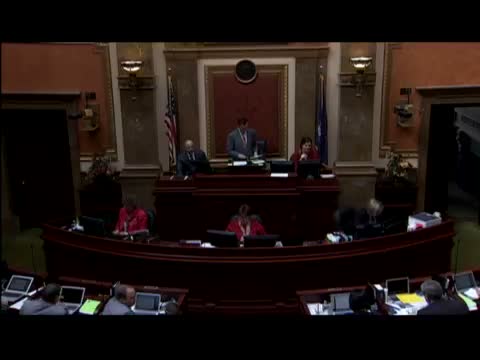
After extended floor debate, the Utah House on Feb. 2 approved House Joint Resolution 3, a petition under Article V calling on Congress to convene a convention of states to consider amendments limiting federal power; the measure passed 45–29 and will be sent to the Senate. (Vote and debate sourced to House floor proceedings.)
SALT LAKE CITY — The Utah House of Representatives voted 45–29 on Feb. 2 to approve House Joint Resolution 3, a measure asking Congress under Article V of the U.S. Constitution to call a convention of states to consider amendments that backers say would limit the power and jurisdiction of the federal government.
Sponsor Representative Nelson told colleagues the federal government has grown beyond its constitutional bounds, citing regulatory expansion, executive orders and judicial decisions. He urged the House to use the Article V process as a “fail-safe” remedy, saying the action would restore state sovereignty. “We are in jeopardy of losing our republic,” Nelson said in his summation.
Nelson framed the resolution as a narrowly targeted vehicle for state-led solutions and argued the convention’s products would still require ratification by three-fourths of the states. He said a simulated convention he attended demonstrated the process could be conducted without harming the Constitution.
Opponents raised procedural and equity concerns. Representative Red pressed the sponsor on whether a convention can be confined to pre‑set topics, asking, “Where does it state in the Constitution… that a convention can be limited to things determined before the convention is called?” Nelson responded that the scope is governed by the resolution, delegate limitations and the convention agenda, and that ratification by 38 states provides a high safeguard.
Other members warned a convention could be dominated by the powerful or yield unintended consequences. Representative Hollins said her diverse constituents might be excluded from deliberations and described the risk of a convention “of the rich and the powerful.” Another member urged more study and cited existing state law underpinning Utah’s sovereignty assertions.
Supporters said the difficulty of ratifying amendments — requiring approval by three-fourths of the states — reduces the risk of harmful outcomes. Representative Christopherson argued opponents’ fears are overstated and said the ratification hurdle would prevent radical changes.
The debate included references to the national debt and federal mandates as motivations for action; the sponsor cited figures for the national debt during his remarks. After closing statements, voting was opened and the clerk announced the House’s approval of HJR 3 by a 45–29 margin. The resolution will be transmitted to the Utah Senate for its consideration.
What’s next: Per the House announcement, the resolution will be sent to the Senate. If the Senate approves a similar petition, the process would proceed toward the 34-state threshold that would require Congress to call a convention under Article V. Any amendment proposed by such a convention would still require ratification by three-fourths of the states before taking effect.
Reporting note: Quotes and floor actions above are taken from the official Feb. 2 House floor proceedings and the clerk’s announcements. No external analysis or legal conclusion beyond the floor record is included.