Get Full Government Meeting Transcripts, Videos, & Alerts Forever!
Get email alerts on the Education Board Revisions topic
No spam. Unsubscribe anytime.
Utah House passes HB 136 to give state school board discretion and legislative mitigation backing
Summary
The Utah House passed HB 136, a revision to Board of Education authority that changes certain 'shall' requirements to 'may' and authorizes the legislature to consider mitigating lost federal funds with state revenue surplus, amid debate on scope and funding implications.
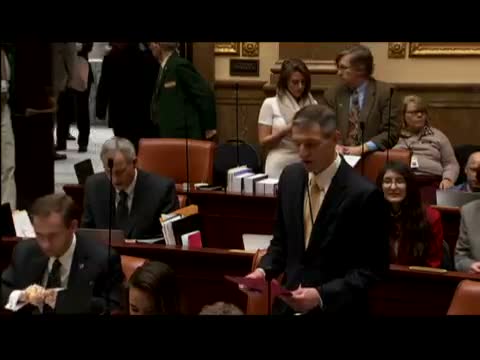
The Utah House passed HB 136, a package of revisions to the Board of Education, as amended, by a vote of 59-14. Representative Kennedy, the bill sponsor, said the change from mandatory to permissive language was adopted after consultation with the state school board to secure board support and to allow the board discretion in how to address federal program conflicts.
"What it does is encourage the state school board to do an analysis of any programs that mandate the federal funds be used in certain ways," Representative Kennedy said, adding that if the board decided not to accept federal funds the legislature would "back up the state school board in the form of revenue surplus funds that would be used to financially mitigate any losses associated with the conflict." He described the change as both practical and symbolic: "They are our constitutional partners. They are equal to us in this process."
Supporters said the amendment—changing 'shall' to 'may'—addressed earlier concerns about imposing undue operational burdens on the board. A representative who had opposed the bill in committee said the amendment made it palatable and consistent with a principle of local control.
Representative Polson cautioned about the bill's utility and scale, noting federal funds are a small share of the state education budget. "This was about 8% of the total budget," Polson said, expressing concern that the bill may be redundant and that it risks appearing to counsel against using federal funds that support low-income students.
Representative Jefferson Moss, citing experience on the state board, said the bill could strengthen communication and cooperation between the board and the legislature.
Representative Hutchings asked whether the bill could be used to request mitigation when the state declined offered federal dollars. Representative Kennedy responded that the bill targets conflicts where federal programs include funds attached to specific requirements and said the hypothetical scenario described by Hutchings likely would not trigger mitigation under the bill's intent.
The House adopted amendment number 3, and, after debate and the sponsor's summation, the bill passed and will be transmitted to the Senate.
The bill text and amendment change the statutory direction to the state school board from mandatory review to permissive review in specified circumstances and include legislative direction to consider using surplus revenue to offset financial losses tied to board decisions about federal programs.
Next steps: HB 136 will be transmitted to the Senate for consideration.