Get Full Government Meeting Transcripts, Videos, & Alerts Forever!
Get email alerts on the Boards And Commissions topic
No spam. Unsubscribe anytime.
Utah House passes bill easing partisan requirements for many state boards and commissions
Summary
The House approved third substitute House Bill 11 on Feb. 1, 2017, 51–21, removing partisan appointment requirements for a subset of state boards to prioritize expertise and ease vacancies; supporters said it affects about 24 of roughly 414 boards, while opponents warned it reduces political balance on important panels.
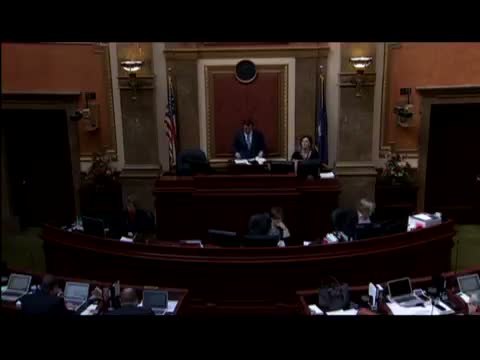
The Utah House of Representatives on Feb. 1 passed third substitute House Bill 11, changing how the governor appoints members to a set of state boards and commissions and removing partisan-appointment requirements for many of them. The measure passed on a floor vote of 51 yes to 21 no and was transmitted to the Senate.
Representative Thurston, the bill sponsor, told the House the measure is aimed at making it easier to fill volunteer positions and to emphasize professional qualifications over party affiliation. He said the state has roughly 414 boards and commissions and the substitute under consideration removes partisan requirements for about 24 of them, allowing appointments based on geography, profession and other forms of diversity rather than primary voting history.
Supporters argued the change would reduce practical barriers to service — for example, by allowing people with necessary expertise who would otherwise be excluded because of an arbitrary party label to serve. Representative Thurston said some boards struggle to recruit members and that focusing on technical qualifications would strengthen governance: "We need experts to serve on those boards. We do not need people to come into the boards who are going to vote as, for example, a Democrat physician or a Republican physician." (Representative Thurston)
Opponents said removing partisan balance risks eroding minority-party representation on panels that make consequential decisions. Representative Jeremy Peterson, who offered a third substitute that narrowed the bill, argued the change could give a future supermajority unchecked influence over appointments and cited a broader principle that some commissions benefit from guaranteed partisan balance. He also read examples from other jurisdictions as a cautionary illustration of majority overreach.
Debate on the floor included technical and policy points: members raised concerns about groupthink on technical boards (citing historical examples), argued for preserving partisan balance on bodies that function like adjudicative panels (for example, the Public Service Commission), and questioned whether vacancies and recruitment problems have causes other than partisan requirements. Several members said they supported removing partisan labels for low-profile, technical boards while retaining them for politically sensitive commissions.
The substitute package adopted on the floor removed one board the lieutenant governor’s office had asked to keep in partisan status; sponsors said federal requirements prompted that request. The sponsor said the change is modest in scope relative to the total number of state boards and that state and local governance examples show nonpartisan boards can function effectively.
With the vote completed, the bill will move to the Senate for further consideration. No funding changes were reported on the floor for the bill; sponsors described the measure as primarily structural and administrative.
Next steps: transmittal to the Utah Senate for consideration and possible committee review there.