Get Full Government Meeting Transcripts, Videos, & Alerts Forever!
Get email alerts on the Health Opioids topic
No spam. Unsubscribe anytime.
Utah House pauses opioid-insurance bill after lawmakers seek more stakeholder coordination
Summary
Lawmakers circled House Bill 90, which would require insurers to adopt policies encouraging non-narcotic pain treatments and other safeguards, after debate over insurer jurisdiction, ERISA plans and potential inconsistent rules across carriers. Sponsor Representative Ward emphasized patient safety and CDC-derived guidance.
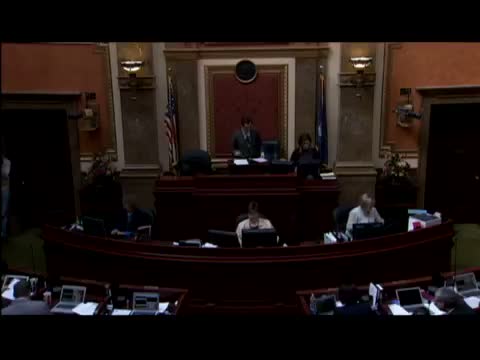
Representative Ryan D. Ward, sponsor of House Bill 90, opened floor debate by saying Utah faces an opioid epidemic and described the measure as a set of insurer-policy requirements drawn from CDC and state prescribing guidelines designed to reduce high-risk prescribing and encourage alternatives to opioids.
Ward said Utah has the fourth-highest opioid overdose death rate and argued HB 90 would ask insurers to adopt policies in five areas: facilitate non-narcotic treatments for chronic pain; adopt medication-assisted treatment policies for opioid use disorder; set co-prescribing rules for sedating drugs; address high-dose opioid prescribing in primary care; and try to prevent unintentional transition from short-term prescriptions to long-term dependence. “This bill is a fairly simple bill,” Ward said. “It lets the insurance companies set their policies, but it says in these five areas, please have a policy about these very important areas.”
A floor amendment to remove a hard-coded year in the bill (striking “2016” from two lines) was offered by Representative Kelly Miles and accepted as friendly; the body approved that amendment by voice vote.
Supporters—such as Representative Duckworth—said the bill builds on prior work and noted the role of specialty pain doctors in treating complex cases. Duckworth said she stood in support and emphasized that many patients are treated by pain specialists for conditions such as cancer and multiple sclerosis.
Several members raised concerns about scope and implementation. One legislator questioned whether ERISA or other self-insured plans outside state insurance commission jurisdiction would be covered and warned that hundreds or thousands of differing insurer policies could create confusion for prescribers. Ward replied the bill covers only insurers under Utah’s jurisdiction and noted insurers already use prior authorization, educational outreach or post-prescription follow-ups to manage safety and cost. “Insurance plans do already, at times, for cost and many times for safety issues, make policies,” Ward said.
After debate, members moved to "circle" the bill—delaying action briefly so the sponsor could work with stakeholders including the Utah Medical Association and insurers. The motion to circle passed on a division, 41 yes to 29 no, meaning the House will pause floor action to allow further coordination rather than proceed to immediate final passage.
The short-term circling means the bill’s sponsor has an opportunity to refine language and seek additional stakeholder agreement before the House takes a final vote. The sponsor told the chamber he preferred to move forward but deferred to the will of the body.
Next steps: HB 90 is circled for further work; the sponsor and members indicated they expect additional conversations with medical and insurance stakeholders before the House revisits the measure.