Get Full Government Meeting Transcripts, Videos, & Alerts Forever!
Get email alerts on the Legislative Proceedings topic
No spam. Unsubscribe anytime.
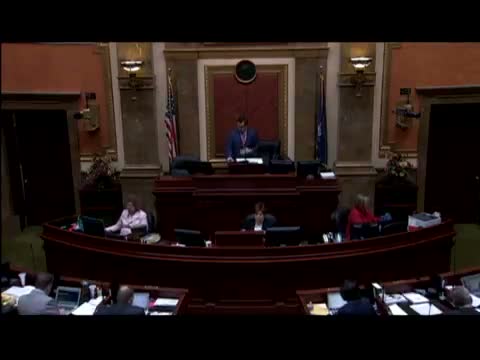
Utah House approves package of bills and schedules Lunar New Year resolution
Summary
On Jan. 25, 2017 the Utah House approved a series of bills and procedural items: HJR 10 (pay for in‑session employees), HB 25 (tax incentive review amendments), HB 28 (public employees long‑term disability amendments), HB 39 (local officer amendments), HB 40 (payday‑lending amendments), and placed HJR 5 (Lunar New Year) on the time‑certain calendar for Jan. 27 at 11:15 a.m.; multiple bills were also assigned to standing committees.
The Utah House conducted routine floor business on Jan. 25, 2017, approving multiple bills and taking scheduling and committee assignment actions that advance the Legislature's early session work.
Major floor actions and outcomes
- HJR 10 (joint resolution authorizing pay of in‑session employees): Moved under suspension of the rules by Representative Noel and sponsored on the floor by Representative Wilson. The House voted 73 yes, 0 no; the resolution was transmitted to the Senate.
- HB 25 (Tax Incentive Review Amendments): Presented by Representative McKay as a Rev & Tax interim bill that enables a designated legislative staffer to access redacted records of economic incentives to improve legislative oversight while protecting taxpayer privacy. The House passed HB 25, 73 yes, 0 no; the bill will be transmitted to the Senate.
- HJR 5 (Joint resolution recognizing the Lunar New Year): Representative Kwan moved to lift HJR 5 from the third‑reading calendar and place it on the time‑certain calendar for Friday, Jan. 27 at 11:15 a.m. She said the scheduling was time sensitive because Lunar New Year falls Jan. 28. The motion passed by voice vote and the item is scheduled for the stated time.
- HB 28 (Public Employees Long Term Disability Act Amendments): Sponsored by Representative Duckworth, the bill clarifies coordination‑of‑benefits obligations for long‑term disability recipients administered by PEHP, establishes procedures and penalties for failing to notify PEHP, and was reported to have no fiscal note. The House passed HB 28, 73 yes, 0 no.
- HB 39 (Local Officer Amendments): Representative Webb explained the bill removes a fixed municipal vacancy‑fill deadline for small cities and instead requires mayor and city council to use "best efforts" to avoid vacancies. The House passed HB 39, 69 yes, 0 no.
- HB 40 (Check Cashing and Deferred Deposit Lending Amendments): See separate report. The House passed the amended bill, 72 yes, 0 no, and transmitted it to the Senate.
Other procedural actions included reading HB 30 (historical preservation amendments) for the second time and placing it on the consent calendar, reading several bills for second time to be placed on the third‑reading calendar (HB 32, HB 63, HB 89), and the Rules Committee assigning numerous bills to standing committees (detailed on the floor record). The Speaker announced a Rules Committee meeting and later the House approved the Rules Committee report and the Speaker assigned bills to the appropriate standing committees.
Announcements and adjournment
Representative Handy reminded members about Utah League of Cities and Towns day at the Salt Palace, maps on the hill exhibits, and other events. Representative Wilson moved that the House adjourn until Thursday, Jan. 26 at 11:00 a.m.; the motion carried and the House adjourned.
Vote tallies listed above are those recorded on the House floor in the transcript. When a roll call was not recorded in the transcript (for example certain committee actions or technical approvals), the transcript records only that the motion "carried" or passed by voice vote; where the transcript did not provide a numeric tally, the article notes that the tally was not specified.