Get Full Government Meeting Transcripts, Videos, & Alerts Forever!
Get email alerts on the Legislative Floor Actions topic
No spam. Unsubscribe anytime.
Utah House advances and passes a slate of mostly uncontested bills; dozens sent to Senate
Summary
On March 5, 2018, the Utah House adopted multiple committee reports and passed a large consent slate, sending dozens of mostly noncontroversial bills back to the Senate, including measures on probation reporting, court-commissioner status and misdemeanor classification.
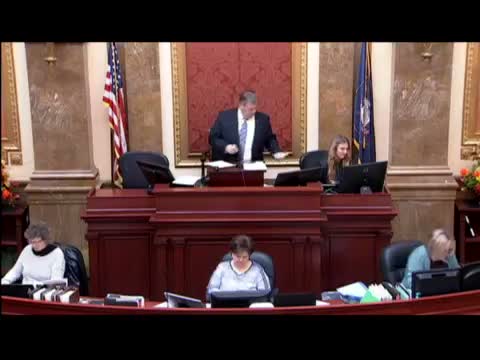
The Utah House of Representatives spent its March 5 afternoon session advancing committee reports, passing a broad consent calendar and sending dozens of Senate-origin and House-origin bills back to the Senate.
Representative Mike Schultz asked members early in the session to check materials on their desks and return ranking ballots for fiscal requests, setting the day’s administrative tone. The House then adopted standing committee reports from Business & Labor, Economic Development and Workforce Services, Education, Government Operations, Health and Human Services, Law Enforcement & Criminal Justice, Natural Resources and other standing committees, placing many items on third-reading calendars or returning them to Rules for fiscal notes.
On the consent calendar and by recorded votes, the House passed, among other measures: - House Bill 440, Pre-sentence Investigation and Probation Report Amendments, which standardizes certain probation reporting procedures; final passage reported 67 yes, 0 no and the bill was transmitted to the Senate. (Sponsor: Representative Hutchings.) - House Bill 451, Court Commissioner Amendments, clarifying exemptions for court commissioners consistent with judicial administration; final passage reported 67 yes, 0 no and will be transmitted to the Senate. (Sponsor: Representative Miles.) - First substitute House Bill 439, coordinated penalties for sexual abuse, intended to correct uncoordinated code provisions and ensure intended penalties in educator-student misconduct cases; passed 70 yes, 0 no and will be transmitted to the Senate. (Sponsor: Representative Christiansen.)
The House also recorded final-passage tallies for a number of Senate bills the body was handling on concurrence or final passage, including Senate Bill 188 (recorded as 69 yes, 0 no) and Senate Bill 166 (energy facility amendments), which passed 69 yes, 1 no after the sponsor described technical changes to Military and Industrial Development Authority (MIDA) processes and CPACE-related clarifications (Sponsor: Representative Handy).
House members discussed and managed the floor calendar throughout the afternoon, lifting bills from Rules to place them on the third reading calendar (including House Bill 2, the new fiscal-year supplemental appropriations act; House Bill 8, agency fee and internal service fund measures; and House Bill 472, Medicaid expansion revisions) so they could be considered in sequence with related fiscal and policy items.
Many items were transmitted to the Senate for final action after the Speaker’s signature. The day’s business was largely procedural and noncontentious on the floor, with most roll-call tallies unanimous or near-unanimous where recorded. The House recessed to continue work later that day.
The House’s actions reflected routine session business: adopting committee recommendations, advancing budget- and code-related housekeeping bills, and scheduling major fiscal measures for floor consideration.