Get Full Government Meeting Transcripts, Videos, & Alerts Forever!
Get email alerts on the Elections Ballot Disposition topic
No spam. Unsubscribe anytime.
Utah House unanimously passes bill to notify voters when absentee ballots are rejected
Summary
On Jan. 24, 2017, the Utah House passed HB 12, the "Disposition of Ballots Amendments," 74-0. The bill requires clerks to notify voters quickly if absentee or vote-by-mail ballots are spoiled and gives voters a chance to correct certain defects; members raised concerns about rural implementation and privacy.
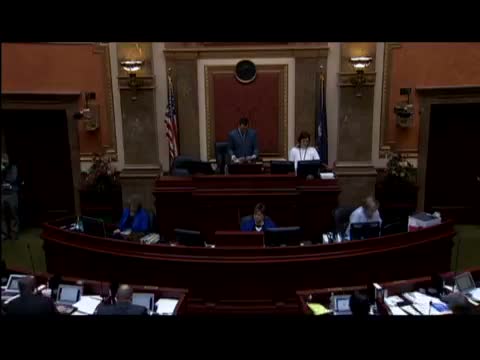
The Utah House of Representatives on Jan. 24 passed HB 12, the "Disposition of Ballots Amendments," by a recorded vote of 74-0, sending the measure to the Senate for consideration. Representative Eliason, speaking for the sponsor, said the bill requires clerks to notify voters when absentee or vote-by-mail ballots are rejected and, when feasible, give them an opportunity to correct the defect.
Supporters said the bill aims to make sure "as many votes as possible are counted." Representative Eliason told members the recent election saw "tens of thousands of ballots that were not counted," citing figures supplied to him that included 16,683 ballots in Salt Lake County and 3,049 in Davis County. "This bill simply says put a place on the envelope... that the voter can list their email address and cell phone number if they would like to be contacted," Eliason said.
The measure requires a clerk who rejects a ballot to notify the voter within one business day if using email or text, and within two business days if mailing notice. Sponsor Eliason said the intent is to allow voters to correct technical defects—such as missing or mismatched signatures or other clerical issues—not to permit a voter to change the substance of their vote. "It is to correct, not change, a ballot," Eliason said; the clerk will spread the legislative intent language in the House journal, he added.
Several members raised implementation questions. Representative Hutchings asked whether the bill covers permanent vote-by-mail and ballots returned by drop box; Eliason confirmed the terms are used interchangeably and the bill applies to ballots returned by mail or drop box. Representative Stratton and Representative Chu pressed on timelines and transparency; Stratton asked about publication of spoiled-ballot lists while Chu expressed concern for timely notification in rural counties. Eliason said providing an email or phone number is optional and noted county clerks helped shape the one- to two-day notification window.
Concerns about rural mail delivery and clerks' capacity were voiced by Representatives Kristofferson and Albrecht. Kristofferson relayed a county clerk's worry about limited time to respond and asked whether penalties exist for clerks who cannot meet the timeline; Eliason said there are no penalties in the bill and that the clerks' association agreed the timeline was workable. Representative 13 (transcript) raised privacy issues about asking for email addresses; Eliason emphasized the field is optional.
Representative Jeremy Peterson and other members urged passage, saying the revised language clarifies existing processes and increases the likelihood that a spoiled ballot will be counted rather than ignored. After brief closing remarks from the sponsor, the House opened voting; the clerk recorded 74 yes, 0 no and announced HB 12 had passed and would be transmitted to the Senate.
The bill's next step is Senate consideration. The House debate highlighted two continuing matters for any implementing rule or amendment: ensuring notification works in rural counties with slower mail service and preserving voter privacy while enabling timely contact.