Get Full Government Meeting Transcripts, Videos, & Alerts Forever!
Get email alerts on the Small Wireless topic
No spam. Unsubscribe anytime.
House adopts substitute to small-cell deployment bill aimed at standardizing fees and speeding rollouts
Summary
The House adopted a third substitute to Senate Bill 189 on March 7, 2018, creating a uniform framework for small wireless facilities and fee schedules to expedite deployments; sponsors said exemptions protect rural power providers and the bill passed 63–0.
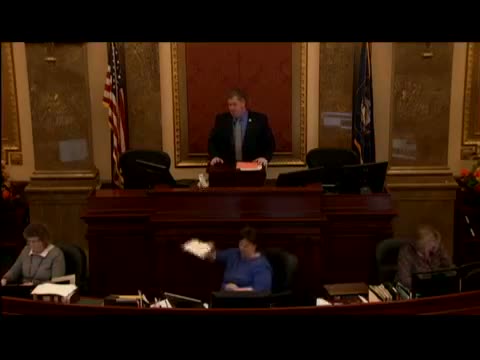
SALT LAKE CITY — The Utah House adopted a substituted version of Senate Bill 189 on March 7, 2018, a measure designed to standardize how municipalities and carriers manage small wireless facilities that improve cellular coverage and support technologies such as 5G and smart-city applications.
Representative Mike Hawkes, the House sponsor, told colleagues the bill creates uniform fee schedules and implementation rules so networks can deploy small cell infrastructure more quickly and predictably. "This carefully crafted bill, consensus bill, is designed to facilitate that and make that process move forward by creating uniform fee schedules and rules for how these are implemented," Hawkes said on the floor.
Hawkes said small cell devices — often attached to light poles or existing right-of-way infrastructure — help fill gaps in rural and urban coverage and are critical for increased data traffic and future technologies. He cited a large increase in data consumption since 2010 to underscore the need for more distributed network infrastructure.
Representative Nelson raised concerns about how rural power providers' poles would be used and whether deployment could interfere with maintenance. Hawkes responded that the bill exempts certain rural power providers from the uniform-access requirements and that compensation and pole-use agreements were handled separately: "So my understanding is they're exempt out," he said.
Supporters listed a range of industry and municipal backers, including the Utah Technology Council, the Salt Lake Chamber of Commerce, the Utah Manufacturers Association and the Utah League of Cities and Towns. Sponsors described the substitute as a negotiated, consensus product intended to streamline deployments and avoid a patchwork of local fees and rules.
The House adopted the third substitute and recorded final passage with a roll-call tally of 63 yea and 0 nay. The substituted bill will be returned to the Senate for consideration in its new form.
What’s next: The Senate will receive the substituted version for further consideration; any remaining jurisdictional questions (for example, compensation for pole owners) may be resolved in implementing agreements or follow-up rulemaking.