Get Full Government Meeting Transcripts, Videos, & Alerts Forever!
Get email alerts on the Maternal Health topic
No spam. Unsubscribe anytime.
House backs $500,000 pay‑for‑success program for nurse home visits to high‑risk mothers, 41‑26
Summary
The House voted to move and pass a fourth substitute to Senate Bill 161, allocating $500,000 for a pay‑for‑success nurse home‑visiting program aimed at high‑risk first‑time mothers; debate centered on whether performance measures guarantee financial savings or only health outcomes.
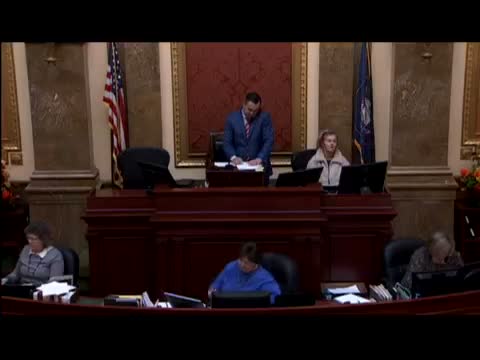
The Utah House on March 7 passed a substituted version of Senate Bill 161 that allocates $500,000 for a pay‑for‑success program to place nurses in the homes of high‑risk first‑time mothers. Representative Red, the House sponsor, described the program as evidence‑based, citing outcomes such as reduced smoking during pregnancy, lower pregnancy‑induced hypertension and reduced premature births.
The sponsor said the adopted fourth substitute reduces a previous fiscal note from about $1 million to $500,000 and described the program as "a pay for performance program" designed to improve maternal and infant outcomes. Representative Red explained that the program targets prevention, arguing early intervention reduces downstream social‑service costs and improves human outcomes.
Several members questioned the financial structure and performance measures. Representative Thurston asked whether the performance measures are tied to financial savings or only health outcomes, noting that many pay‑for‑success models in economic development require private parties to front costs and then receive reimbursement after documented fiscal savings. Thurston pressed: "it sounds like the performance metrics are health outcomes, but there's no guarantee that the state will actually save money. There's just a supposition that those things are associated with lower cost." Representative Red acknowledged it is difficult to state exact savings but cited evidence that reduced preterm births typically lower Medicaid and state costs.
Floor discussion also touched on statutory caps: a floor question noted code language capping outstanding obligations under the chapter at $25,000,000; the sponsor said the program funding in the budget is $500,000 and the cap prevents the chapter's obligations from exceeding $25,000,000 in total.
After extended debate about measurements and structure, the House recorded a vote of 41 yes and 26 no on the fourth substitute for SB 161; the substitute passed the House and will be transmitted to the Senate for further consideration.