Get Full Government Meeting Transcripts, Videos, & Alerts Forever!
Get email alerts on the Operation Rio Grande topic
No spam. Unsubscribe anytime.
House approves $4.9 million transfer to continue Operation Rio Grande
Summary
The Utah House on Sept. 20 passed First Substitute House Bill 1,001 to transfer $4,900,000 from the Department of Corrections to the Department of Workforce Services to continue Operation Rio Grande, an interagency response aimed at addressing crime and homelessness in the Rio Grande area. The bill passed 72-0.
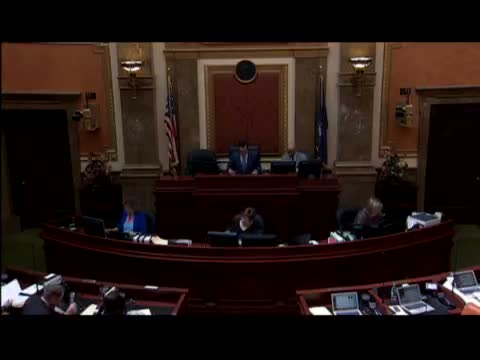
The Utah House of Representatives on Sept. 20 approved First Substitute House Bill 1,001, authorizing a $4,900,000 transfer from the Department of Corrections to the Department of Workforce Services to continue Operation Rio Grande, the state-led effort in downtown Salt Lake City to address street crime and homelessness.
Representative Brad Wilson, sponsor of the substitute bill, told the chamber the operation has restored public order in the Rio Grande area and increased referrals to service providers. “In the last 6 or 7 weeks, there have been a thousand referrals given to service providers,” he said, and added that “we've stood up 300 additional jail beds” and were “in the process of adding 273 substance abuse treatment beds.”
Supporters described the problem as statewide, not just local, and praised the interagency effort. Representative 16 said people from other counties travel to the Rio Grande area for drugs and services, adding that rural hospitals and jails have seen impacts when patients or detainees are returned to counties without resources. Several lawmakers emphasized that enforcement must be paired with treatment and housing.
Opponents and questioners raised constitutional and oversight concerns. An unnamed representative asked whether the state should assume responsibilities of local law enforcement; another representative asked whether the funds could be used for legal defense for those arrested, noting roughly $300,000 had been set aside earlier for indigent defense. Wilson said DWS will manage the funds collaboratively and the bill requires DWS to notify the Governor’s Office of Management and Budget and the Legislative Fiscal Analyst seven days prior to expenditure so legislators and oversight bodies can track spending.
After summation by the sponsor, voting closed. First Substitute House Bill 1,001 passed the House with 72 yes votes and 0 no votes and was transmitted to the Senate for consideration.
The bill is intended to sustain enforcement, expand treatment capacity, and continue referrals to providers through partnerships among state agencies and local governments. Legislators repeatedly stressed the need for continued reporting and accountability as the operation moves from enforcement into treatment and housing phases.