Get Full Government Meeting Transcripts, Videos, & Alerts Forever!
Get email alerts on the Taxes Fuel Ballot topic
No spam. Unsubscribe anytime.
House approves placing 10¢-equivalent fuel-tax question on ballot after hours of debate on wording and transparency
Summary
After sustained floor debate on whether to state the increase as a 10¢-per-gallon equivalent or a percentage, the House voted 55–17 to submit a ballot question asking voters whether to increase the state motor and special fuel tax by an amount equivalent to 10¢ per gallon to fund education and local roads.
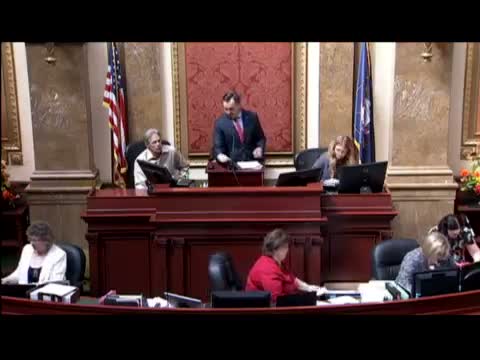
The Utah House on March 8 approved a first-substitute joint resolution to submit a nonbinding question to voters that would raise motor and special fuel taxes by the equivalent of 10¢ per gallon to provide additional funding for public education and local roads. The measure passed after sustained debate, 55–17, and will be transmitted to the Senate for consideration.
Sponsor Representative Edwards defended the approach as a way to give “every single voter in the state … an opportunity” to weigh in and said a detailed voter information packet will accompany the ballot title to explain percentages and projected fiscal impacts. Edwards told colleagues the ballot text uses the 10¢ figure because it is easier for voters to understand and that more detailed analysis will appear in voter information materials.
Opponents pressed for additional clarity. One representative argued that a nonbinding question can have binding political effects and said bluntly, “it's impossible for this to be non binding,” warning that future legislatures would feel bound by the result. Lawmakers also argued over whether the ballot text should include the current state motor-fuel tax rate (cited in debate as 29.4¢ per gallon) or display a percentage increase (some members cited a fiscal-analyst figure of 33% for context). Supporters contended that the phrase “equivalent of 10¢ per gallon” plus the voter packet provides the right balance of clarity and flexibility.
The debate produced several voice and substitute amendments that were considered and, in some cases, withdrawn. Representative Fosston and others argued for transparency by including a percentage or current rate in the ballot language; the sponsor and several members resisted changing the core language because of statutory deadlines for submitting ballot titles to the lieutenant governor. During floor exchanges members repeatedly emphasized voter comprehension and the political consequences of presenting a nonbinding question.
The resolution emerged from a broader package intended to rebalance revenue between transportation and education, and supporters said the question offers voters a direct voice on a funding choice. The first substitute of HJR 20 now goes to the Senate; if approved there, the lieutenant governor’s office will circulate a voter information packet and the ballot question will appear in the next applicable election cycle.