Get Full Government Meeting Transcripts, Videos, & Alerts Forever!
Get email alerts on the Legislative Process topic
No spam. Unsubscribe anytime.
House approves rule change limiting routine constitutional notes after heated debate
Summary
The Utah House voted 46-21 to advance HJR 14, a joint rules resolution that removes routine constitutional (legislative review) notes from bills. Supporters said the notes create conflicts for legislative counsel; opponents said removing them risks taxpayer costs and reduces transparency.
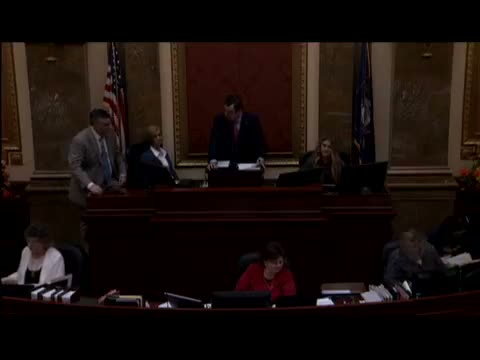
The Utah House of Representatives on March 8 advanced HJR 14, a joint rules resolution that curtails the routine use of constitutional or legislative review notes, voting 46 to 21 to send the change to the Senate.
Representative McKay, the measure’s sponsor, argued supporters were acting to prevent a conflict of interest for Legislative Research and General Counsel staff, who he said could be asked to both prepare constitutional notes and later defend the same statutes in court. "We do care about, we should care about, whether the bills that we pass out of here are constitutionally subject to challenge or not, because it costs taxpayers money," McKay said during floor debate. He urged colleagues to end the “experiment of constitutional notes.”
Opponents pressed for preserving the notes as a public check. Associate General Counsel Arendt argued the bar for issuing notes is high but that those notes still provide crucial information about when proposals might cross constitutional lines, saying, "At least have that information." Representative Ray said he supported removing the notes because he believed legislators should rely on courts when constitutionality is at issue, while other members warned the change could leave lawmakers and taxpayers exposed to unnecessary litigation costs.
The debate included repeated exchanges over whether the legislature’s counsel should provide constitutional analysis and whether a different, less formal mechanism could supply the same information without creating an ethical conflict. Representative Ivory moved the previous question during debate, effectively limiting further discussion before the final vote.
The resolution passed the House 46-21 and will be transmitted to the Senate for its consideration. The change, if adopted by both chambers, would alter the House’s process for producing and publishing legislative review/constitutional analyses; proponents said they expect to revisit alternative mechanisms to provide constitutional guidance without the current form of notes.
Next steps: HJR 14 will be transmitted to the Utah Senate for consideration; no timetable for Senate action was given on the floor.