Get Full Government Meeting Transcripts, Videos, & Alerts Forever!
Get email alerts on the Legislative Actions topic
No spam. Unsubscribe anytime.
House clears package of concurrence-calendar bills including oil-and-gas, theft, and offender housing amendments
Summary
The Utah House approved a string of concurrence-calendar and third-reading bills — including HB 419 (oil and gas cleanup), SB 59 (theft amendments), HB 126 (offender housing conference report), and several technical or licensing changes — most passed unanimously or by large margins.
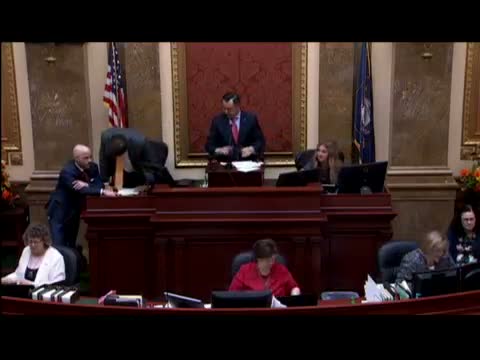
SALT LAKE CITY — During a busy floor session the Utah House approved a package of bills on the concurrence and third-reading calendars that addressed a mix of technical fixes, regulatory clarifications and criminal-justice changes.
Key outcomes:
• House Bill 419 (Oil and Gas Amendments): Sponsor described the bill as a technical cleanup to clarify gas-pooling authority, retroactive dates tied to first production and application to subsequently drilled wells; passed 66-0.
• Senate Bill 59 (Theft Amendments): The bill removes a statutory twice-convicted threshold in certain theft escalations so that thefts in a specified value range remain misdemeanors regardless of repeat offenses; passed 53-18.
• First substitute House Bill 126 (Offender Housing Amendments): A conference committee report was transmitted and adopted; the House approved the report 68-1 and returned it to the Senate.
• Several concurrence items were placed and passed on the calendar with limited floor debate, including first substitute House Bill 409 (Utah Life and Health Insurance Guarantee Association Amendments, 71-0) and other technical measures related to licensing, juvenile justice, and voting amendments (SB 94 passed 72-0 as substituted).
Sponsors characterized many of these measures as technical corrections or clarifications rather than policy overhauls. Where questions were raised — for example, over theft classification — members offered brief debate before recorded votes.
The House recessed until 4:00 p.m. following the day's floor business.