Get Full Government Meeting Transcripts, Videos, & Alerts Forever!
Get email alerts on the Technology Procurement topic
No spam. Unsubscribe anytime.
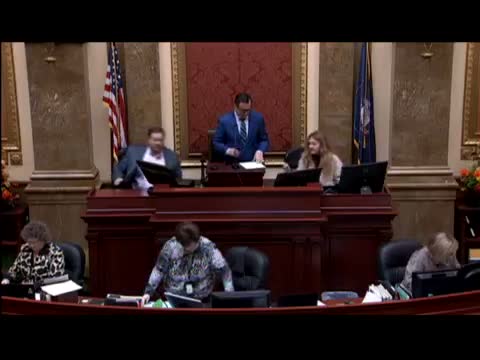
House hears Technology Innovation Amendments to let state centralize software procurement
Summary
Representative Cutler presented second substitute HB 395 to authorize the Department of Technology Services to coordinate development and shared procurement of software across agencies; sponsor said modest investment could yield substantial statewide savings and requires review by an architecture board and the technology advisory board.
Representative Cutler presented second substitute House Bill 395 as a state-technology reform to encourage shared procurement and development of software across state agencies. Cutler described common inefficiencies when individual agencies separately commission applications and said the Department of Technology Services (DTS) currently operates on fee-for-service without dedicated capital to pursue cross-agency opportunities.
Under the proposal, DTS would be able to identify shared needs, route proposals through an architecture review board and the technology advisory board (TAB), and — if approved — develop or procure an application that multiple agencies can use. Agencies that could pay for services would pay; other agencies could participate through cost-deferral mechanisms to defray initial development/procurement costs. The process would include reporting back to the technology advisory board and the interim Public Utilities, Energy and Technology Committee on realized savings and process improvements.
Representative Handy and others voiced support on the floor, saying the bill offers flexibility and a process for experimentation. Cutler stressed the bill is intended to produce net savings over time even where small investments are required up-front. Voting was opened on the bill during the session segments provided; the transcript does not include a final recorded vote tally for HB 395 in the provided segments.