Get Full Government Meeting Transcripts, Videos, & Alerts Forever!
Get email alerts on the Homelessness topic
No spam. Unsubscribe anytime.
Utah House adopts measure creating capped fund to help cities hosting homeless shelters
Summary
The House approved a sixth substitute to Senate Bill 235, authorizing up to $5 million (with a $200,000 city cap) from a sales-tax distribution to mitigate local impacts of homeless shelters; supporters said it funds policing and services, while critics said the formula is too narrow.
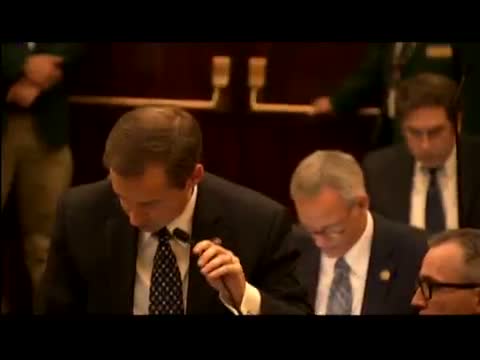
Salt Lake City — The Utah House on the floor approved a substitute of Senate Bill 235 that sets up a state-distributed mitigation fund for cities hosting homeless shelters.
Representative Jason Lisonbee, the floor sponsor, told colleagues the sixth substitute establishes a maximum statewide pot of $5,000,000, with no single city paying more than $200,000. "This bill caps any city at 200,000, and because it's based on the population, that will be pro rata paid," Lisonbee said, describing a funding stream generated through a 1.8% distribution from the population component of sales tax and to be distributed by the state homeless coordinating committee.
Supporters said the funds will pay for recurring needs after new shelter buildings open, including police coverage and other services. Representative Briscoe, who backed the measure, said full-time policing at shelters reduced crime around facilities and that one-time interim supports will not last "forever." "This bill is another way of helping these shelters with their need," Briscoe said.
Opponents argued the bill's eligibility and formula are too narrow. Representative Kotler said neighboring cities that experience homelessness but do not have formal shelters would not qualify — for example, some communities that host people in warehouses would be excluded. "Murray could not get benefit for this because it doesn't have a homeless shelter," Kotler said, urging colleagues to reconsider whether the mechanism addresses all local impacts.
The motion to substitute and final passage were put to roll call. Sixth substitute Senate Bill 235 received 44 yes votes and 28 no votes and passed the House as substituted; it will return to the Senate for further consideration.
What happens next: The bill, as passed by the House, will go back to the Senate for concurrence or further action before any funds are distributed. The statute sets eligibility criteria and authorizes the coordinating committee to award funds based on applications and demonstrated need.