Get Full Government Meeting Transcripts, Videos, & Alerts Forever!
Get email alerts on the Education Policy topic
No spam. Unsubscribe anytime.
House approves resolution urging Utah schools to adopt restorative-justice practices
Summary
The House passed HR 1 urging school districts and the State Board of Education to implement restorative-justice practices — such as talking circles and peer courts — as an alternative to suspension and to help address the school-to-prison pipeline; the resolution passed 48–22.
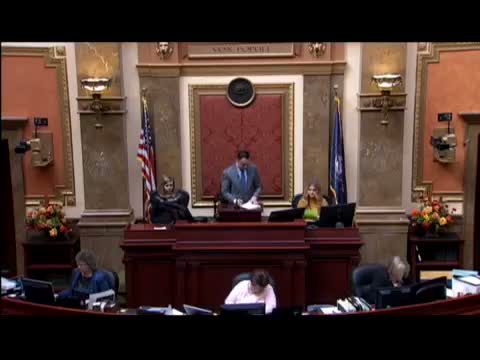
On Feb. 26 the Utah House approved first substitute HR 1, a resolution encouraging the Utah State Board of Education and local districts to implement restorative-justice practices in public K–12 schools.
Representative Katy Hollins, sponsor of HR 1, said the resolution complements juvenile-justice reforms and cited a University of Utah report recommending restorative practices to reduce suspensions and the school-to-prison pipeline. Hollins described restorative-justice tools including peer courts, talking circles and mindfulness check-ins and said research and local pilot sites have shown reductions in suspensions and improved student outcomes.
Other members acknowledged benefits in many settings but cautioned restorative practices are not a universal solution. One member said such practices can be valuable but may be inappropriate or insufficient in cases of serious bullying or physical victimization; Hollins responded that the resolution does not eliminate suspension as an option and that participation by victims is voluntary.
The House closed debate and recorded a 48–22 vote in favor; the resolution passed and will be forwarded per legislative process. Sponsors and supporters urged districts and the State Board to consider the nonbinding guidance as an alternative tool to support students and reduce exclusionary discipline.