Get Full Government Meeting Transcripts, Videos, & Alerts Forever!
Get email alerts on the Assisted Living topic
No spam. Unsubscribe anytime.
Utah House approves bill to require assisted-living data and exit interviews amid concern about senior homelessness
Summary
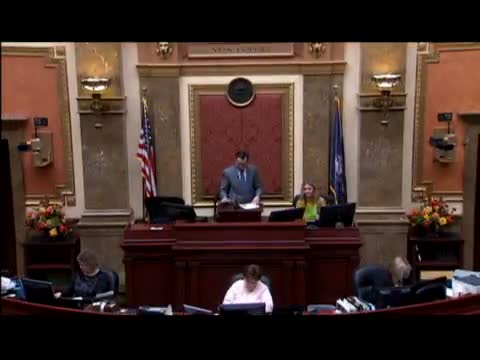
Lawmakers on Feb. 26 approved a bill requiring assisted-living facilities to provide resident data to the state ombudsman and for the ombudsman to offer voluntary exit interviews, a step sponsors said is needed to understand whether rising charges are contributing to senior homelessness.
The Utah House on Feb. 26 passed second substitute House Bill 263, which requires assisted-living facilities to submit certain resident data to the state long-term care ombudsman and directs the ombudsman to offer voluntary exit interviews to residents who leave those facilities.
Sponsor Representative Tiara Kwan said the measure is intended to fill a gap in information about what happens when seniors are priced out of assisted living. "This will require assisted living facilities to give data, data that they're already collecting, to our state ombudsman, who will then also offer a voluntary exit interview to our seniors, so that we can figure out that landscape for our seniors," Kwan said during floor remarks.
Kwan and backers told colleagues they brought the bill after constituents raised concerns and after committee work turned up limited public data on assisted-living exits. One member speaking in support said her mother's assisted-living costs averaged roughly a 5 percent increase per year and worried that corporate ownership and repeated buyouts were driving price pressure. Representative Hollins noted an increase in calls about seniors becoming homeless or evicted and urged the House to address the trend.
Supporters said the bill does not create new data collection burdens beyond what facilities already compile; rather, it centralizes information in the ombudsman's office and adds an opportunity for voluntary exit interviews to capture why residents left. Opponents did not mount sustained floor debate and the measure was approved on a 59–13 vote and will be transmitted to the Senate for consideration.
The bill's next step is Senate consideration; if enacted, the state ombudsman will publish or otherwise retain aggregated findings that lawmakers and stakeholders can use to assess whether assisted-living affordability is contributing to senior homelessness.