Get Full Government Meeting Transcripts, Videos, & Alerts Forever!
Get email alerts on the Floor Votes Roundup topic
No spam. Unsubscribe anytime.
Utah House advances multiple bills and resolutions in morning session; several items circled for later
Summary
On March 1, 2018, the Utah House passed a slate of bills and resolutions on the consent calendar, including employment-law and healthcare scope cleanups, and recognized public-health initiatives; several complex bills were circled for further amendment after debate or technical issues.
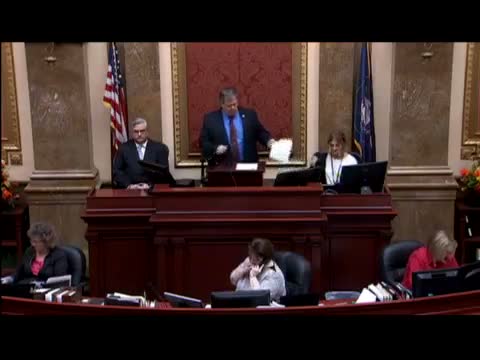
The Utah House of Representatives on March 1 cleared a series of bills and resolutions quickly on the consent calendar and third-reading calendar before adjourning for a mid-day recess.
Representative Hawkes presented House Bill 364, an employment-law amendment that clarifies when low-level employees can be held liable for unpaid wages and presumes service-platform providers are independent contractors absent clear evidence to the contrary. The House recorded 63 "yay" votes and sent the bill to the Senate for further consideration.
Representative Fossen described first substitute House Bill 448 as a technical cleanup to the podiatry scope of practice aimed at correcting wording that had caused hospital-privilege concerns for practicing podiatrists. The House passed the bill by voice (61-0) and referred it to the Senate.
The body also passed House Concurrent Resolution 18 recognizing the "Stop the Bleed" campaign (64-0), House Bill 402 revising parts of the probate code to allow reappointment of a personal representative when additional assets are located (66-0), and several Senate-origin bills that had been placed on the House calendar after committee recommendations, including Senate Bill 105 (crime-statistics reporting), second substitute Senate Bill 83 (state real property notice requirements), and Senate Bill 170 (adding conservation districts to the state transparency database). Those Senate bills were returned to the Senate after passage for the signature of the president.
Representative Gibson offered first substitute Senate Bill 167, which reduces some municipal requirements for food trucks; the House approved the bill 67-1 and will return it to the Senate for signature. Representative Notwell presented House Bill 441 to tighten settlement-agreement procedures; the House approved the measure 68-0 and sent it on to the Senate.
The House also passed Senate Bill 147, a nursing-education initiative intended to encourage higher-education institutions to produce more nurses; the bill passed with a recorded vote (66-2) and will be returned to the Senate for signature.
Several items were not resolved immediately: the body circled a number of bills for further consideration later in the day (including complex or substituted bills), and technical problems with the chamber’s electronic access prevented full consideration of some third-reading items before the noon recess.
The House recessed until 2:00 p.m., planning to use afternoon floor time to resume work on both House and Senate items.
Ending: The House completed a broad set of routine approvals and sent them to the Senate; outstanding technical and substantive items were circled for amendment and later consideration.