Get Full Government Meeting Transcripts, Videos, & Alerts Forever!
Get email alerts on the Public Safety.law Enforcement topic
No spam. Unsubscribe anytime.
House approves off‑duty employment bill to standardize contracts and liability for officers
Summary
Second substitute HB 268 passed the House 65‑3 on March 1, 2018. Sponsor Representative Perry said the bill standardizes procurement and contract requirements for secondary off‑duty employment to manage liability and protect officers, primary employers and taxpayers.
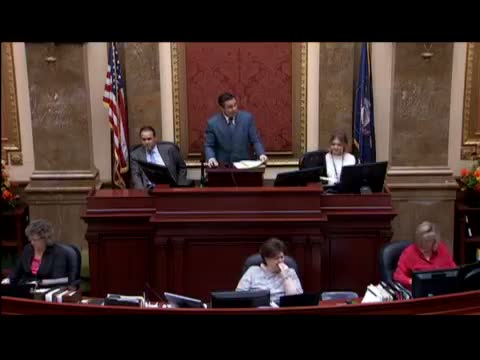
The Utah House passed second substitute House Bill 268 on March 1, 2018, a bill that standardizes rules and contract requirements for law‑enforcement officers performing secondary off‑duty employment. The measure passed the House 65‑3 and will be transmitted to the Senate.
Sponsor Representative Perry described the bill as a three‑year effort developed with law enforcement groups and the Salt Lake County District Attorney’s office. He said the legislation replaces ambiguous procurement language with provisions better suited to contracting secondary employment and requires clear contracts that specify liability and workers’‑compensation arrangements so officers are not left uninsured when working off duty.
Perry said the goal is risk management: to transfer, mitigate or allocate liability so that officers, departments and taxpayers are protected. He said officers can still work secondary jobs but that employers should either contract through the department (so coverage and fees flow through official channels) or otherwise sign clear agreements stating which party accepts liability.
Representatives asked whether the bill would reduce secondary employment opportunities for officers. The sponsor acknowledged a possible reduction for particularly high‑risk jobs but said standardized contracting has in other implementations led to more opportunities and higher pay for officers. After debate the House voted to pass the bill 65‑3.