Get Full Government Meeting Transcripts, Videos, & Alerts Forever!
Get email alerts on the Legislative Roundup topic
No spam. Unsubscribe anytime.
Utah House passes a slate of bills and resolutions, sends measures to the Senate
Summary
On Feb. 26 the House advanced multiple measures — including mental-health protections for first responders, sentencing-guideline clarifications, resource-management and climate stewardship resolutions, early-care coordination, and criminal-accounting fixes — and transmitted them to the Senate.
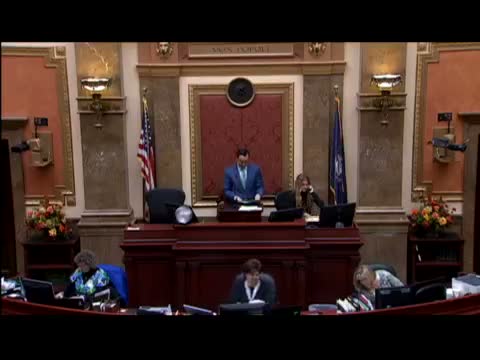
The Utah House used limited floor time on Feb. 26 to consider and pass several bills and concurrent resolutions across a range of topics, transmitting each to the Senate for further consideration.
Mental-health protections for first responders: Representative (speaker 9) moved and presented first-substitute House Bill 209, which defines first responders and calls for an interim working group to study barriers to treatment. The House passed the first substitute 54–16 and will transmit it to the Senate.
Sentencing supervision guidelines: First-substitute House Bill 291 directs the Utah Sentencing Commission to develop consistent supervision-length guidelines so that supervision aligns with sentenced maximums and improves reentry planning; Representative Hutchings presented Amendment 2 to clarify alignment with statute. The bill was amended and passed on the floor and will be transmitted to the Senate.
Climate and resource resolutions: First Substitute HCR 7 (climate/environmental stewardship), presented by Representative Edwards and developed with students and stakeholders, passed 46–24. HCR 10, a concurrent resolution approving the statewide resource management plan presented by Representative Stratton, passed 58–11.
Early childhood coordination: House Bill 319 places recommendations from SB 100 into statute to create a governance framework for coordinating existing early childhood services (it does not create new programs). After debate, the House passed HB 319 by a narrow margin, 38–32.
Criminal judgment accounts and court-payment mechanics: Representative Waite moved to uncircle and adopt first substitute HB 273 to allow families to pay fines directly to courts within 30 days when a defendant is serving a prison sentence, closing an administrative gap. First substitute HB 273 passed 67–0.
Intergenerational poverty pilot: House Bill 326 (House Bill 3 26) would create a competitive grant program for counties that experience high intergenerational poverty, requiring a 25% county match. The House passed the initiative 65–3.
Firefighter recognition: Representative Dunnigan introduced SCR 7 to honor firefighters who responded to national and in-state disasters; members in the gallery were invited to stand and receive applause.
The House adopted a Rules Committee report assigning several bills to standing committees and then adjourned until Feb. 27 at 10:00 a.m.